Besides genetics, three non-genetic factors make you taller: early-life nutrition and deep sleep (which build new bone before age 18), spinal decompression and posture training (which recover 0.7 to 1.6 inches lost to gravity and slouching in adults), and footwear engineering (which adds 2.0 to 4.0 inches instantly with zero medical risk).
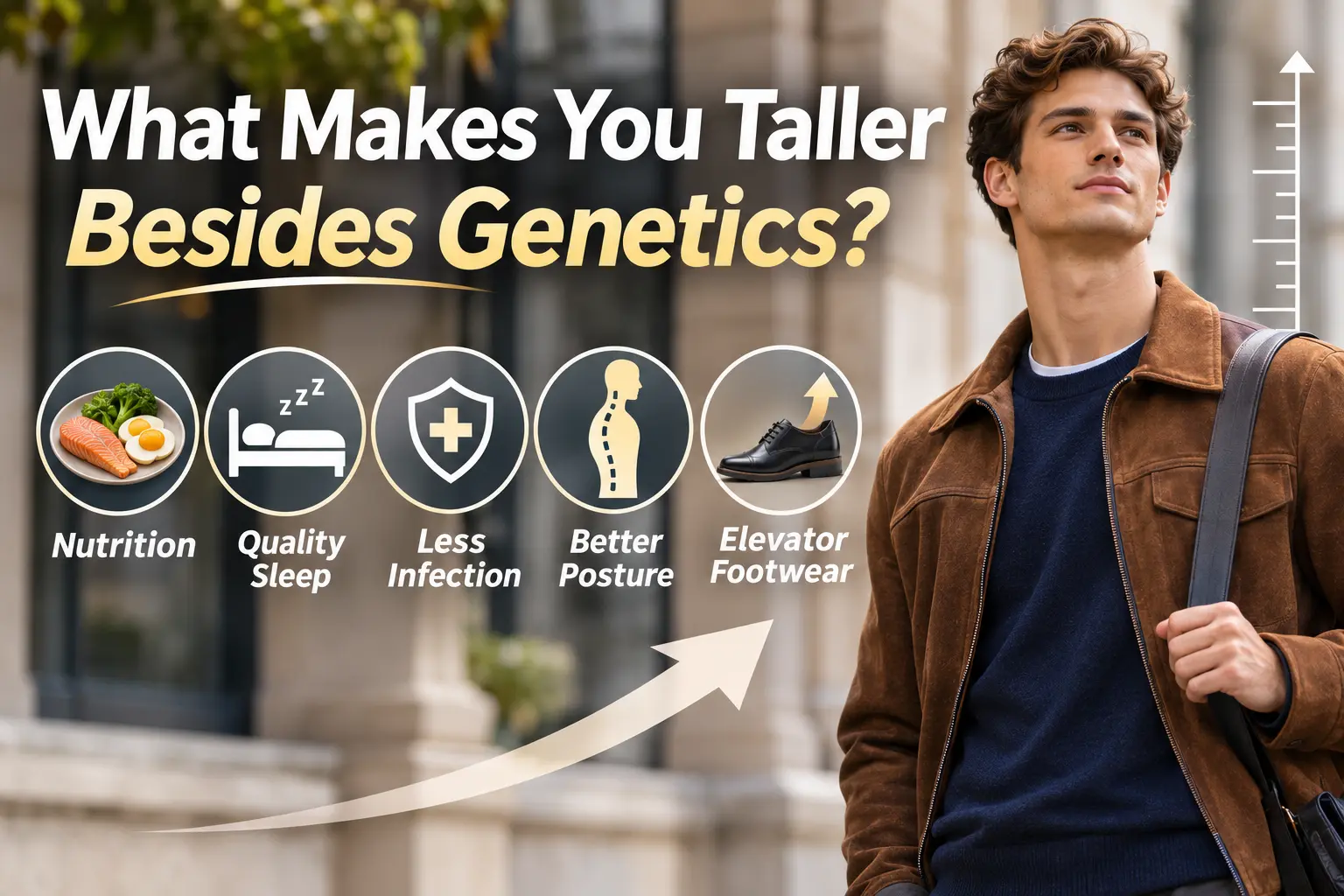
Most online guides mix advice for 13-year-olds with advice for 30-year-olds. That creates false hope. Once your epiphyseal plates (the soft cartilage growth plates at the ends of your long leg bones) harden into solid bone between ages 16 and 20, no vitamin, hanging bar, or stretch will lengthen your femur or tibia.
Knowing which biological stage you are in lets you focus only on levers that actually change your height on a tape measure.
The 3-Layer Stature Model
- Layer 1 — Biological Bone Growth (Under Age 18): High-quality animal protein paired with alkaline produce, plus deep slow-wave sleep (when 70% of nighttime growth hormone fires). Controls roughly 16% to 31% of final adult male height.
- Layer 2 — Mechanical Spine Recovery (Ages 18+): Reversing daily disc compression (up to 19.3 mm / 0.76 inches lost every day) and correcting upper-back slouching (which steals up to 4 cm / 1.6 inches).
- Layer 3 — Instant Stature Engineering (Ages 18+): Purpose-built elevator shoes and boots add 2.4″ to 4.0″ (6 to 10 cm) immediately—matching the average gain of cosmetic limb-lengthening surgery (6.7 cm) for under 0.3% of the cost and zero recovery time.
1. How Much Height Is Actually Non-Genetic? (Twin & Century Data)
Non-genetic factors account for 16% to 31% of adult male height differences—and up to 47% in women.
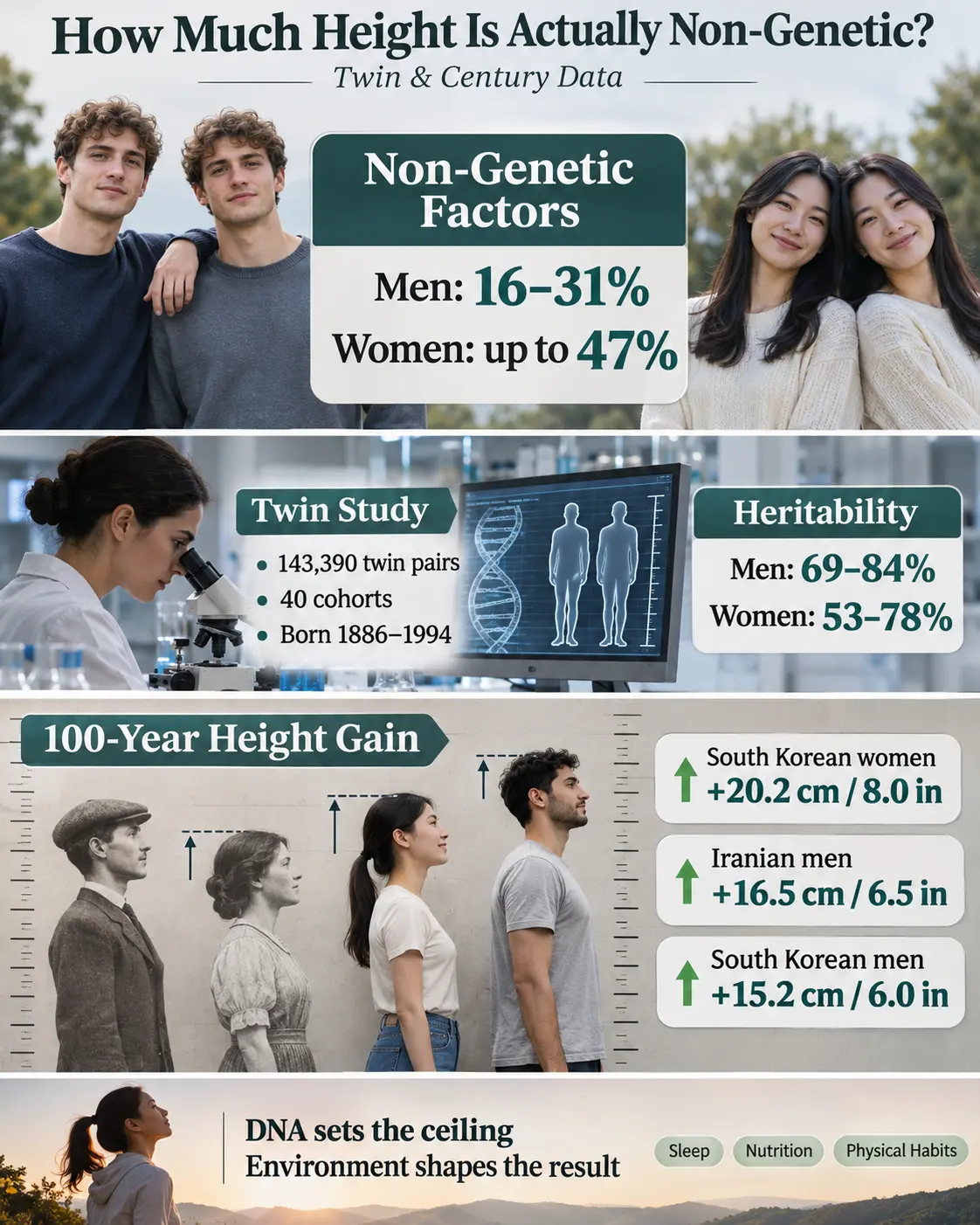
An international research team led by Aline Jelenkovic pooled data from 143,390 complete twin pairs across 40 cohorts born between 1886 and 1994, published in eLife (NCBI PMC5156525). They found that heritability (the share of height variation explained by DNA) ranged from 69% to 84% in men and 53% to 78% in women.
What does a 20% to 30% non-genetic margin look like in real inches? A massive 100-year tracking study by the NCD Risk Factor Collaboration (NCD-RisC) in eLife gives a clear answer (PubMed). Between the 1896 and 1996 birth cohorts—far too short a timeframe for human DNA to mutate—environmental upgrades reshaped entire nations:
- South Korean women gained an average of 20.2 cm (8.0 inches) in a single century.
- Iranian men gained 16.5 cm (6.5 inches), and South Korean men gained 15.2 cm (6.0 inches).
DNA sets your potential height ceiling. Your environment, sleep quality, and physical habits determine whether you hit the top of that ceiling or stop 3 inches short.
2. Layer 1 (Before 18): Three Non-Genetic Levers That Grow Real Bone
If your growth plates are still open (typically ages 0 to 17 for girls and 0 to 19 for boys), these three non-genetic factors directly drive bone elongation.
1. Animal Protein Paired With Alkaline Produce (The PRAL Factor)
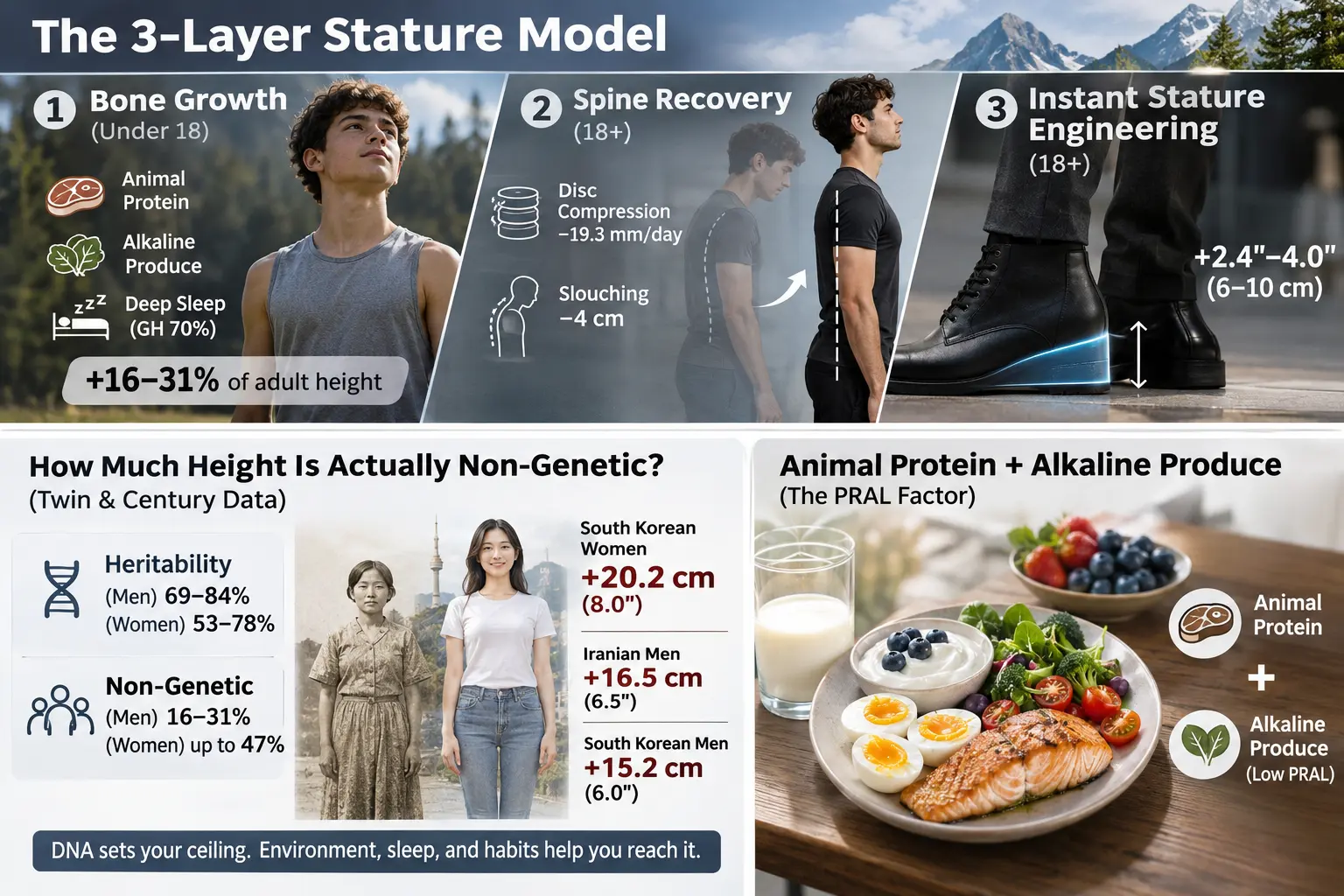
Eating high-quality protein builds bone length, but only if your diet balances its acidity with fruits and vegetables.
A 2022 longitudinal study in the Journal of Clinical Endocrinology & Metabolism tracked 189 children from ages 3 to 17 using weighed food records and 24-hour urine biomarkers. Habitual intake of total and animal protein above minimum guidelines linked directly to taller final adult stature (most strongly in girls).
However, researchers uncovered a catch: diets high in PRAL (Potential Renal Acid Load—the excess acid produced when the body metabolizes meat and grain without enough vegetables) weakened that height gain. Similarly, a Nordic nutrition review in Food & Nutrition Research confirmed that childhood milk and animal protein intake correlates positively with linear height growth.
Actionable target for teens: Pair complete animal proteins (eggs, Greek yogurt, fish, poultry) with potassium-rich vegetables and fruit at every meal so the body does not leach calcium from developing bones to buffer dietary acid.
2. Slow-Wave Deep Sleep (Where 70% of Growth Hormone Happens)

Sleeping “8 hours” is not enough if bright screens or late bedtimes cut off your deepest sleep cycles.
In men, roughly 70% of nighttime Human Growth Hormone (HGH) pulses happen during slow-wave sleep (SWS)—the deepest, non-dreaming phase of sleep that dominates the first three hours after you fall asleep. The total volume of HGH your pituitary gland releases matches how long you stay in slow-wave sleep.
Actionable target for teens: Keep a fixed bedtime window and avoid heavy meals or sugary snacks within 2 hours of sleep—high blood insulin right before bed blunts that initial slow-wave HGH spike.
3. Childhood Infection Control & Cortisol Management

Chronic illness and prolonged high stress act like an emergency brake on bone growth. When a growing body fights repeated respiratory or gut infections—or runs on chronically elevated cortisol (the primary stress hormone)—it redirects calories away from skeletal elongation toward immune repair.
That biological trade-off explains why nations with clean water, childhood vaccines, and steady pediatric care experienced the 6-to-8-inch century leaps recorded by NCD-RisC.
3. Layer 2 (Adults 18+): Reclaiming 0.7″ to 1.6″ Lost to Gravity and Slouching
Once you hit adulthood, your leg bones stop growing—but your spine makes up roughly 40% of your standing height, and it compresses and curves far more than most people realize.
The “First-Hour Shrinkage” Rule: Daily Disc Compression Math
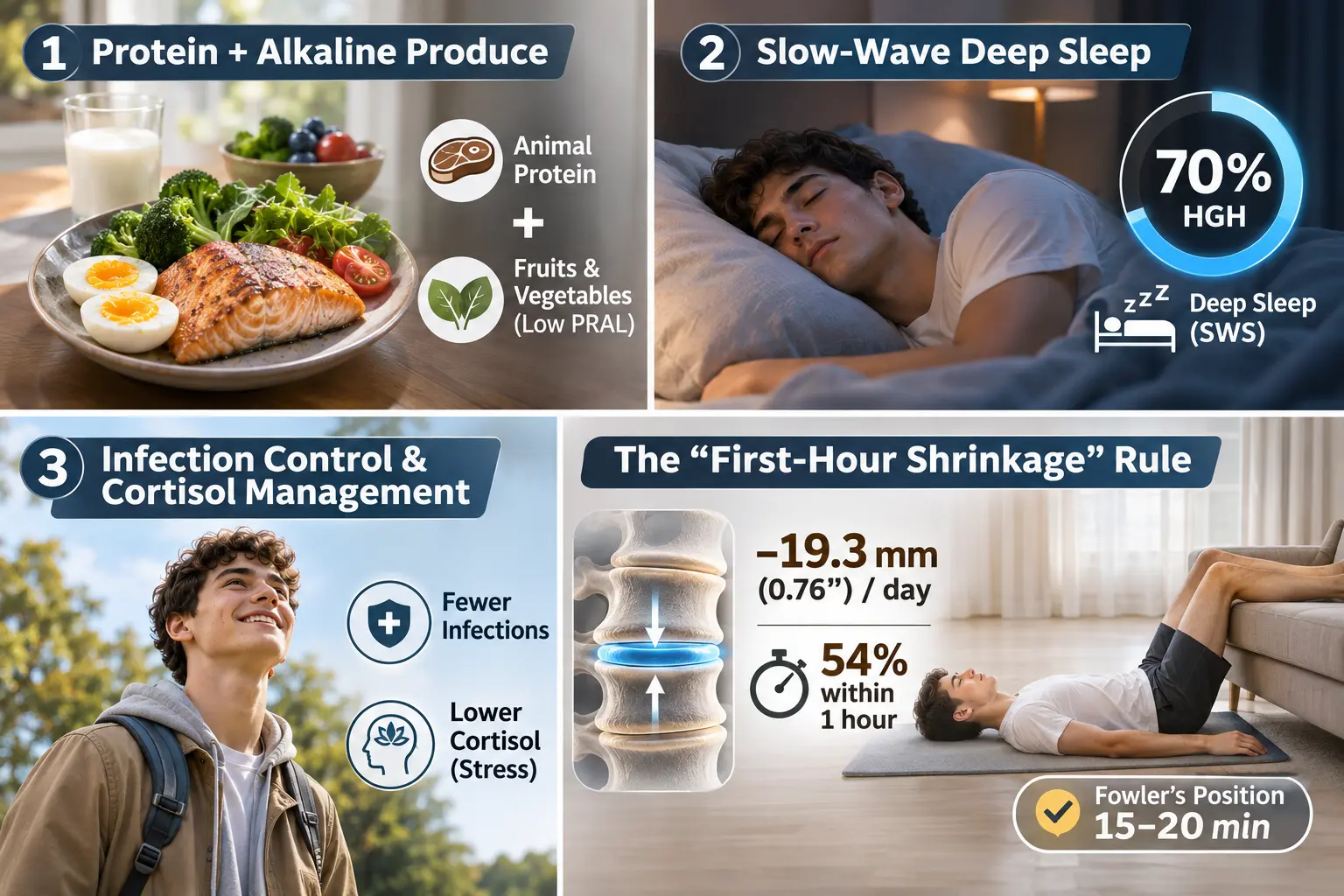
You are physically shorter at dinner than you were at breakfast—and you lose most of that height before you finish your morning coffee.
In a landmark precision study published in Spine, researchers A. R. Tyrrell, T. Reilly, and J. D. G. Troup measured young adults with 1-millimeter accuracy throughout the day. They found two surprising rules about your intervertebral discs (the fluid-filled shock-absorbing cushions stacked between your spinal bones):
- Average daily height loss: Adults shrink by an average of 19.3 mm (1.1% of total height, or 0.76 inches) from waking to bedtime as gravity squeezes water out of spinal discs.
- The first-hour drop: Exactly 54% of your entire day’s height loss happens during the first 60 minutes after getting out of bed.
Carrying heavy loads makes that compression happen even faster. Motion-analysis testing in European Spine Journal showed that walking while carrying everyday weighted bags triggers measurable lumbar spinal shrinkage (up to 1.36% length loss in the lower spine) in just 30 minutes.
How to reclaim 0.5 inches before an evening event: Tyrrell’s Spine study tested recovery positions and found that resting in Fowler’s position (lying flat on your back on the floor with your calves resting up on a chair or couch at a 90-degree knee bend) pulls fluid back into your spinal discs significantly faster than standing or sitting rest.
Spending 15 to 20 minutes in Fowler’s position before a wedding, date, or photo shoot noticeably restores morning stature.
Postural Height Theft: Reversing Rounded Upper Backs
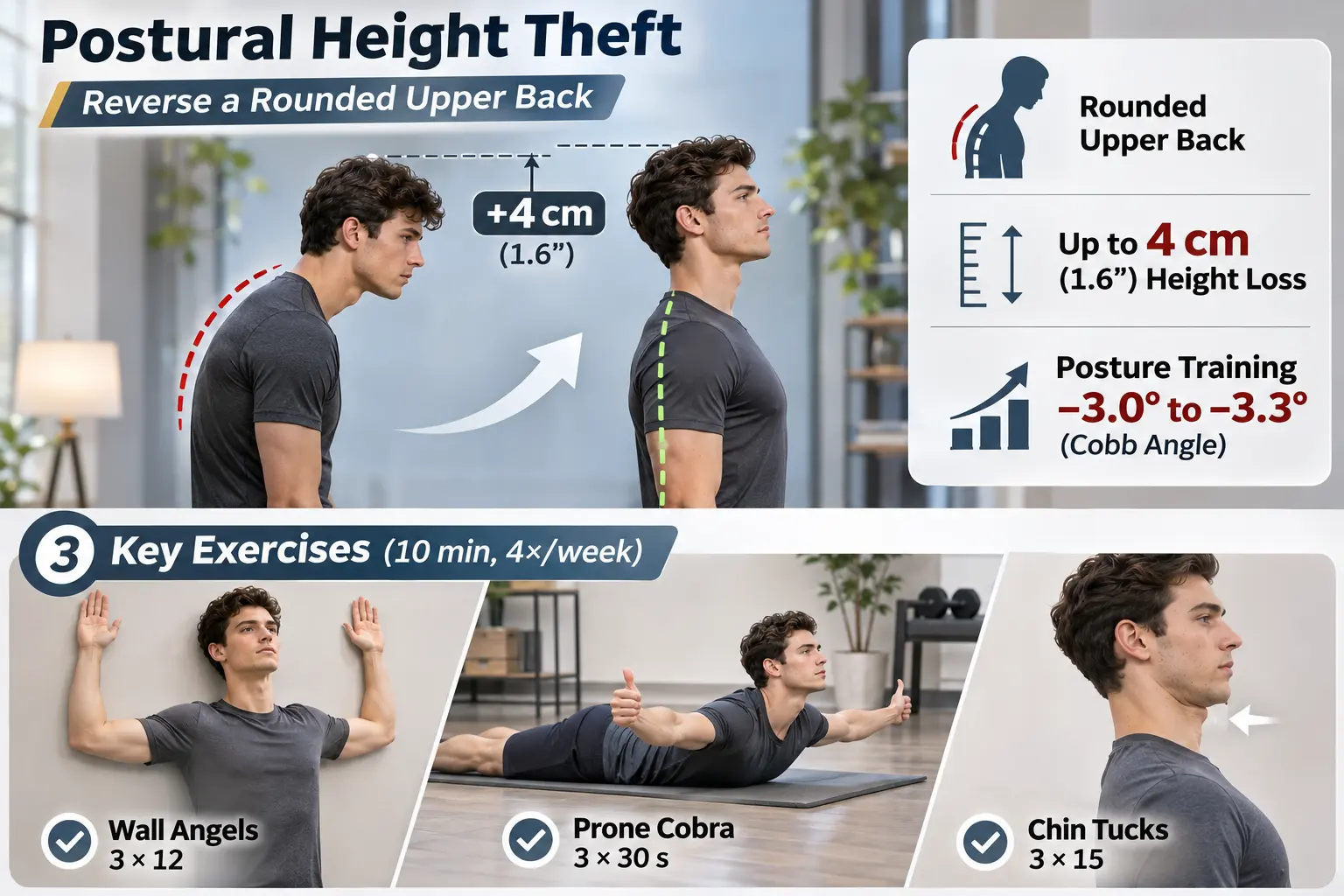
Desk work and phone scrolling steal far more adult height than aging bones alone.
Researchers led by Deborah M. Kado evaluated 1,578 adults in the Journal of the American Geriatrics Society. Men were significantly more likely than women to develop hyperkyphosis (an excessive forward rounding of the upper spine).
Participants reported an average of 4 cm (1.6 inches) of height loss—even though fewer than 3% had actual spinal fractures. Weak back muscles and stiff chest muscles pull the head forward and fold the upper torso downward.
The good news is that targeted strength work reverses measurable spinal curvature. In the 6-month SHEAF Randomized Controlled Trial led by Wendy B. Katzman at UCSF (Osteoporosis International, 99 adults), participants performed 1 hour of therapist-guided spine-strengthening and posture exercises three times per week.
X-rays proved the exercise group reduced their spinal Cobb angle (the clinical degree measurement of upper-back curvature) by 3.0° to 3.3° compared to controls and reported stronger self-image.
Three exercises to uncoil your spine (10 minutes, 4x/week):
- Wall Angels (3 sets of 12 slow reps): Stand with your heels, glutes, shoulder blades, and back of your head touching a wall; slide your arms slowly overhead without letting your lower back arch off the wall.
- Prone Cobra Holds (3 sets of 30 seconds): Lie face-down on the floor, lift your chest 2 inches off the mat, squeeze your shoulder blades together, and point your thumbs toward the ceiling to strengthen spinal extensors.
- Chin Tucks (3 sets of 15 reps): Pull your chin straight backward (making a gentle double chin) while keeping your eyes level to reverse forward head posture.
4. Layer 3 (Adults 18+): The Adult Height ROI Matrix (Shoes vs. Posture vs. Surgery)
If you are an adult who wants more than the 0.5 to 1.5 inches posture work can recover, you have two realistic physical paths: footwear engineering or limb-lengthening surgery. Compare every real adult height option side by side below.
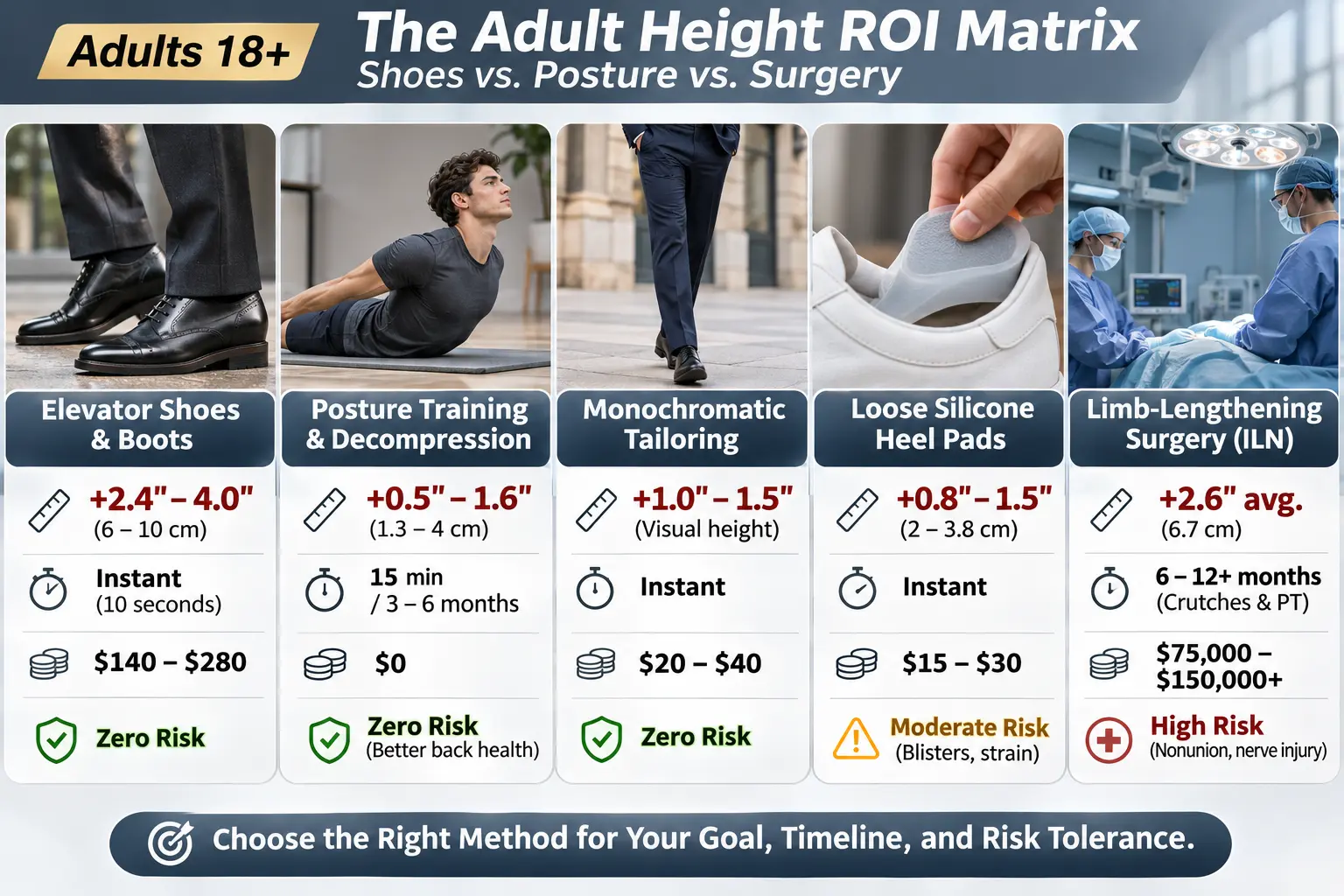
| Adult Height Method | Real Height Gain | Time to See Result | Typical Cost (USD) | Medical Risk | Who Should Choose This (Best For) |
|---|---|---|---|---|---|
| Built-In Elevator Shoes & Boots | +2.4″ to 4.0″ (6 – 10 cm) | Instant (10 seconds) | $140 – $280 | Zero (When built on a full-arch last) | Men 5’4″ to 5’10” wanting immediate, undetectable stature for work, weddings, dating, and travel. |
| Spine-Strengthening & Fowler’s Decompression | +0.5″ to 1.6″ (1.3 – 4 cm recovered) | 15 min (temporary) / 3–6 months (posture) | $0 (Home bodyweight routine) | Zero (Improves back health) | Every adult—especially office workers with tech neck or rounded shoulders. |
| Monochromatic Tailoring (Visual Proportion) | +1.0″ to 1.5″ (Perceived visual height) | Instant | $20 – $40 (Pant hemming) | Zero | Men pairing shoes and trousers—eliminates horizontal color breaks at the ankle. |
| Loose Silicone Heel Pads Inside Regular Shoes | +0.8″ to 1.5″ (2 – 3.8 cm) | Instant | $15 – $30 | Moderate (Blisters, forefoot strain, slipping) | Short 1-hour photo shoots only. Pushes your heel above the shoe collar during normal walking. |
| Cosmetic Limb-Lengthening Surgery (ILN) | +2.6″ average (6.7 cm; range 1.5–13 cm) | 6 to 12+ months (Crutches & daily PT) | $75,000 – $150,000+ | High (Nonunion, nerve injury, joint stiffness) | Severe stature dysphoria cases only after psychiatric screening and evaluation at an accredited orthopedic center. |
Why Purpose-Built Elevator Footwear Outperforms Surgery for 99% of Adults
A systematic review of cosmetic stature lengthening (surgically cutting the thigh or shin bones and slowly separating them using an internal motorized nail) published in Bone & Joint Research found an average height gain of 6.7 cm (2.6 inches).
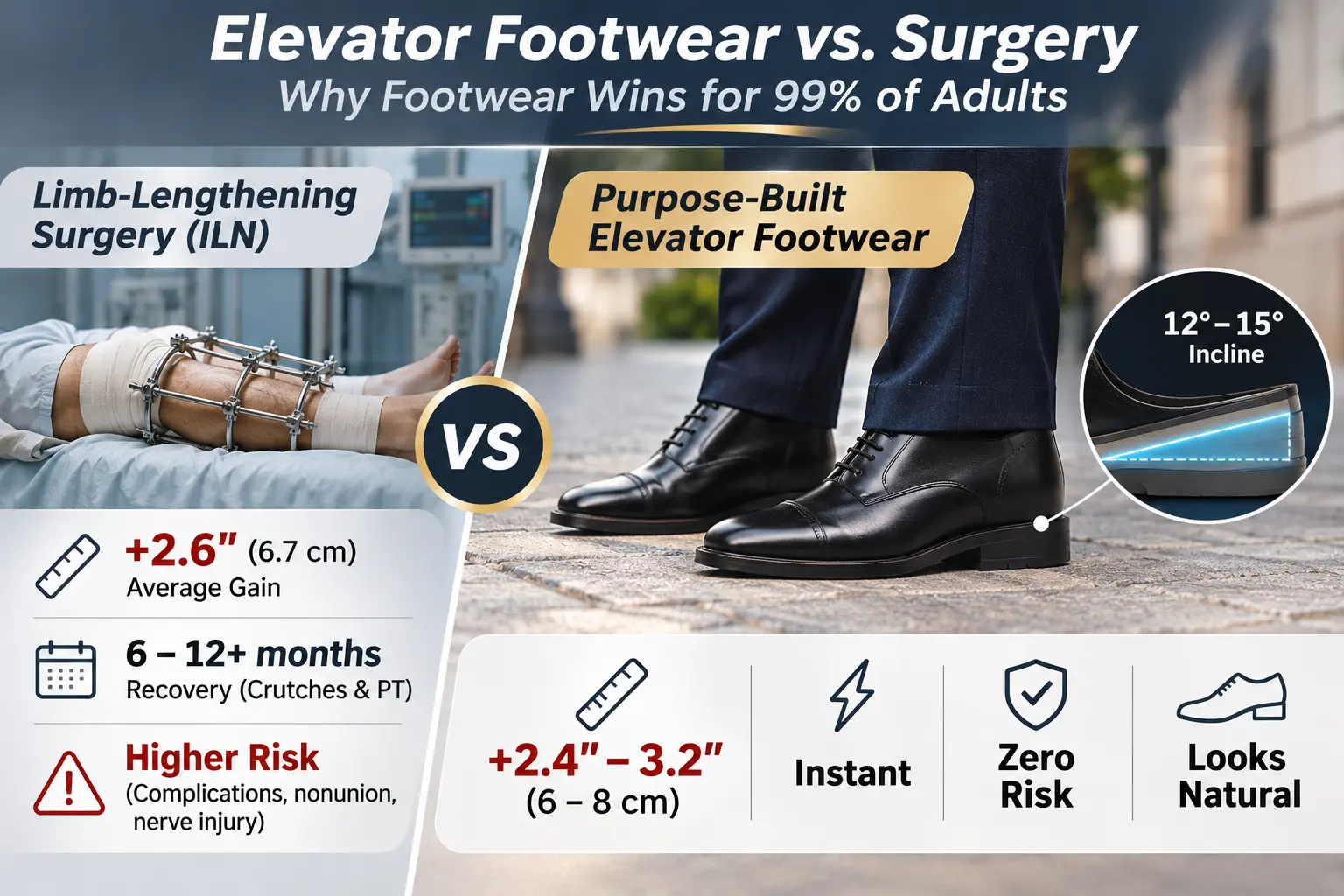
Even with modern internal nails, patients averaged 0.78 problems, 0.94 obstacles, and 0.15 major complications per person—and a 2024 specialized center audit documented severe complications including bone nonunion, hip and knee contractures, and peroneal nerve entrapment.
By contrast, a pair of purpose-built elevator dress shoes, Chelsea boots, or leather sneakers delivers 6 to 8 cm (2.4 to 3.2 inches) of physical elevation—virtually identical to the surgical average—without breaking a single bone.
Unlike cheap drugstore insoles, engineered elevator footwear is built over a deepened shoe last (the 3D mold used to form the leather upper) with a continuous 12-to-15-degree internal incline.
Your heel stays locked inside the collar, the exterior heel looks like a standard 1.1-inch shoe, and pairing dark boots with matching quarter-break trousers adds another inch of visual leg length.
5. Three Popular Height Myths That Waste Your Money
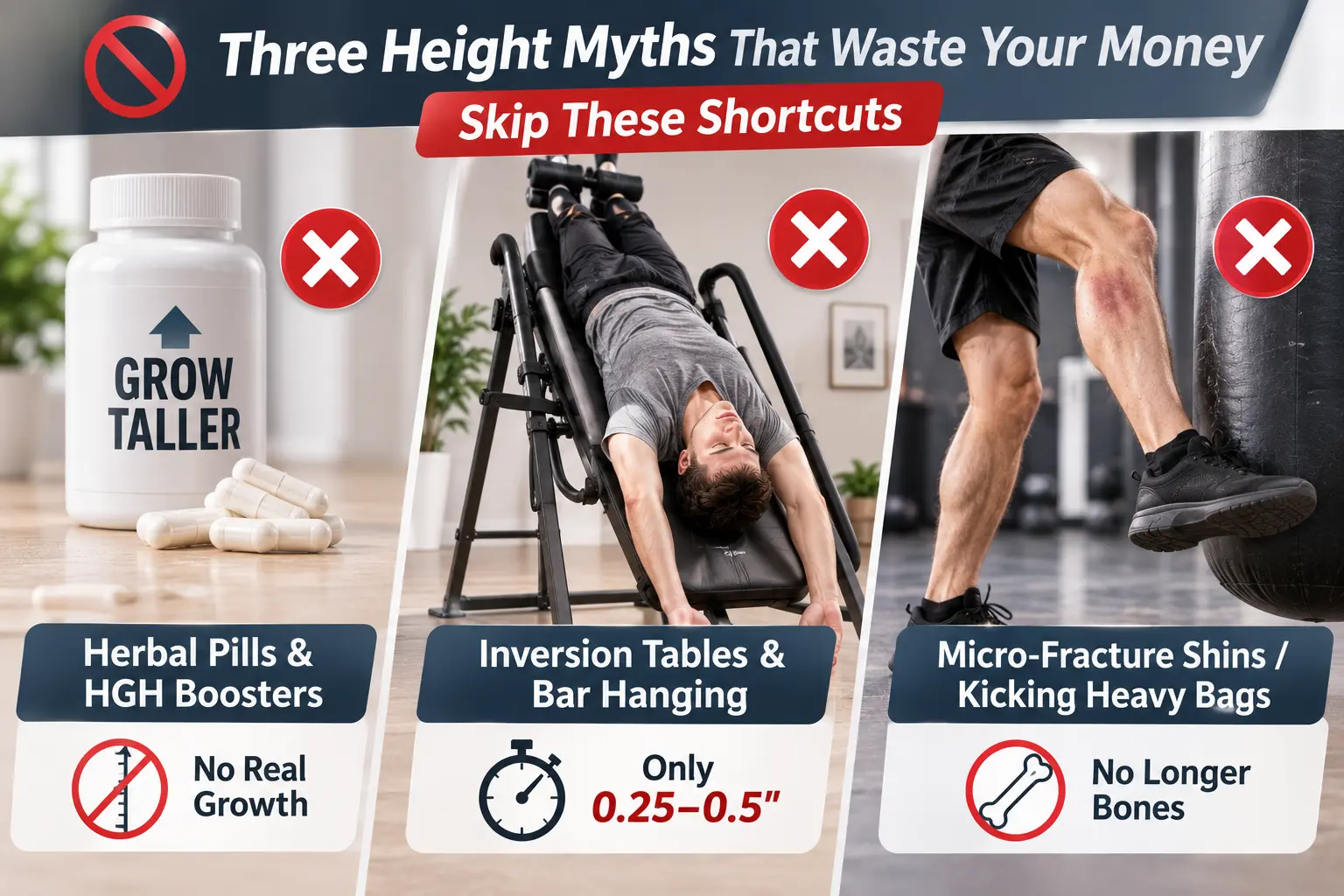
Skip these three viral shortcuts if you are over 18:
- “Grow Taller” Herbal Pills & HGH Boosters: Over-the-counter amino acid pills cannot reopen fused bone plates. Even prescription injectable HGH cannot lengthen adult long bones once epiphyseal fusion is complete—and abusing it as an adult risks abnormal jaw, hand, and organ enlargement (acromegaly).
- Inversion Tables & Bar Hanging for Permanent Inches: Hanging upside down temporarily unloads your spinal discs and adds roughly 0.25 to 0.5 inches right after you step off. Gravity compresses those discs right back down within 30 to 60 minutes of standing upright.
- Micro-Fracture Shins / Kicking Heavy Bags: Online forums claim that bruising your shins creates “micro-fractures” that heal longer. Human bone remodeling thickens the outer bone wall (cortical density) to resist impact; it never stretches bone length.
6. Frequently Asked Questions (FAQ)
How much of your height is not genetics?
Twin research covering 143,390 twin pairs shows that non-genetic environmental factors explain 16% to 31% of height variation in men and 22% to 47% in women. Across populations, better childhood nutrition, sleep, and healthcare can shift average adult height by 15 to 20 cm (6 to 8 inches) within a few generations without any change in DNA.
Can you actually get taller after 18 without surgery?
You cannot grow longer leg bones after your growth plates fuse (usually between ages 16 and 20), but you can still add 3 to 4.5 inches of real and visual standing height without surgery. Combine spinal decompression and back-strengthening posture work (+0.5″ to 1.6″ recovered) with purpose-built elevator shoes or Chelsea boots (+2.4″ to 3.2″ physical lift) and matching no-break trousers (+1″ visual leg elongation).
Why am I taller in the morning than at night?
Gravity squeezes water out of your spinal discs all day long. Clinical measurements in the journal Spine show that adults lose an average of 19.3 mm (0.76 inches) between waking up and going to sleep—and 54% of that shrinkage happens during the very first hour out of bed. Lying flat with your knees propped up at 90 degrees (Fowler’s position) for 15 minutes rehydrates the discs faster than standing rest.
7. References
- Jelenkovic, A., Hur, Y.-M., Sund, R., et al. (2016): Genetic and environmental influences on adult human height across birth cohorts from 1886 to 1994 (143,390 Twin Pairs). eLife, 5, e20320. NCBI PMC Full Text | PubMed
- NCD Risk Factor Collaboration (NCD-RisC) (2016): A century of trends in adult human height. eLife, 5, e13410. NCBI PMC Full Text | PubMed
- Hua, Y., Remer, T., & Buyken, A. E. (2022): Adult Stature and Protein Intake During Childhood and Adolescence From 3 Years Onward. Journal of Clinical Endocrinology & Metabolism, 107(7), e2833–e2842. PubMed
- Hörnell, A., Lagström, H., Lande, B., & Thorsdottir, I. (2013): Protein intake from 0 to 18 years of age and its relation to health: a systematic literature review. Food & Nutrition Research, 57. NCBI PMC Full Text
- Van Cauter, E., & Plat, L. (1996): Physiology of growth hormone secretion during sleep. The Journal of Pediatrics, 128(5 Pt 2), S32–S37. PubMed
- Tyrrell, A. R., Reilly, T., & Troup, J. D. G. (1985): Circadian variation in stature and the effects of spinal loading. Spine, 10(2), 161–164. PubMed
- Fowler, N. E., Rodacki, A. L., & Rodacki, C. D. (2012): The effects of upper limb loading on spinal shrinkage during walking. European Spine Journal, 21(12), 2553–2560. NCBI PMC Full Text
- Kado, D. M., Huang, M. H., Barrett-Connor, E., & Greendale, G. A. (2005): Hyperkyphotic Posture and Poor Physical Functional Ability in Older Community-Dwelling Men and Women. Journal of the American Geriatrics Society, 53(11), 1923–1929. NCBI PMC Full Text
- Katzman, W. B., Vittinghoff, E., Lin, F., et al. (2017): Targeted spine strengthening exercise and posture training program to reduce hyperkyphosis in older adults: results from the SHEAF randomized controlled trial. Osteoporosis International, 28(10), 2831–2841. NCBI PMC Full Text
- Marwan, Y., Cohen, D., Alotaibi, M., et al. (2020): Cosmetic stature lengthening: systematic review of outcomes and complications. Bone & Joint Research, 9(7), 341–350. NCBI PMC Full Text | PubMed
- Specialized Center Complication Audit (2024): Complications after cosmetic limb lengthening, a specialized center experience. NCBI PMC Full Text