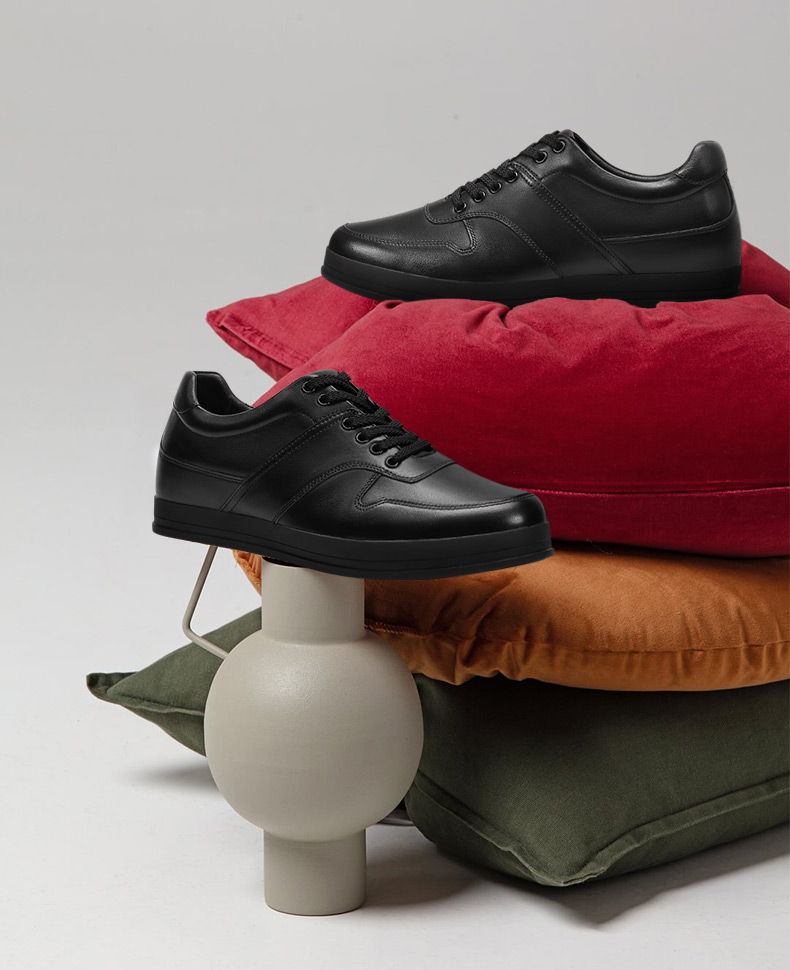
New boots punish you before they reward you. That thick leather, that rigid sole, that sturdy heel counter — the same features that make work boots, leather boots, and elevator boots last for years are what dig into your feet during week one.
Here’s the good news: you can cut the break-in time in half with the right approach.
No gimmicks. Just 6 methods that boot guys and cobblers actually use.
1. Nail Your Size Before Anything Else
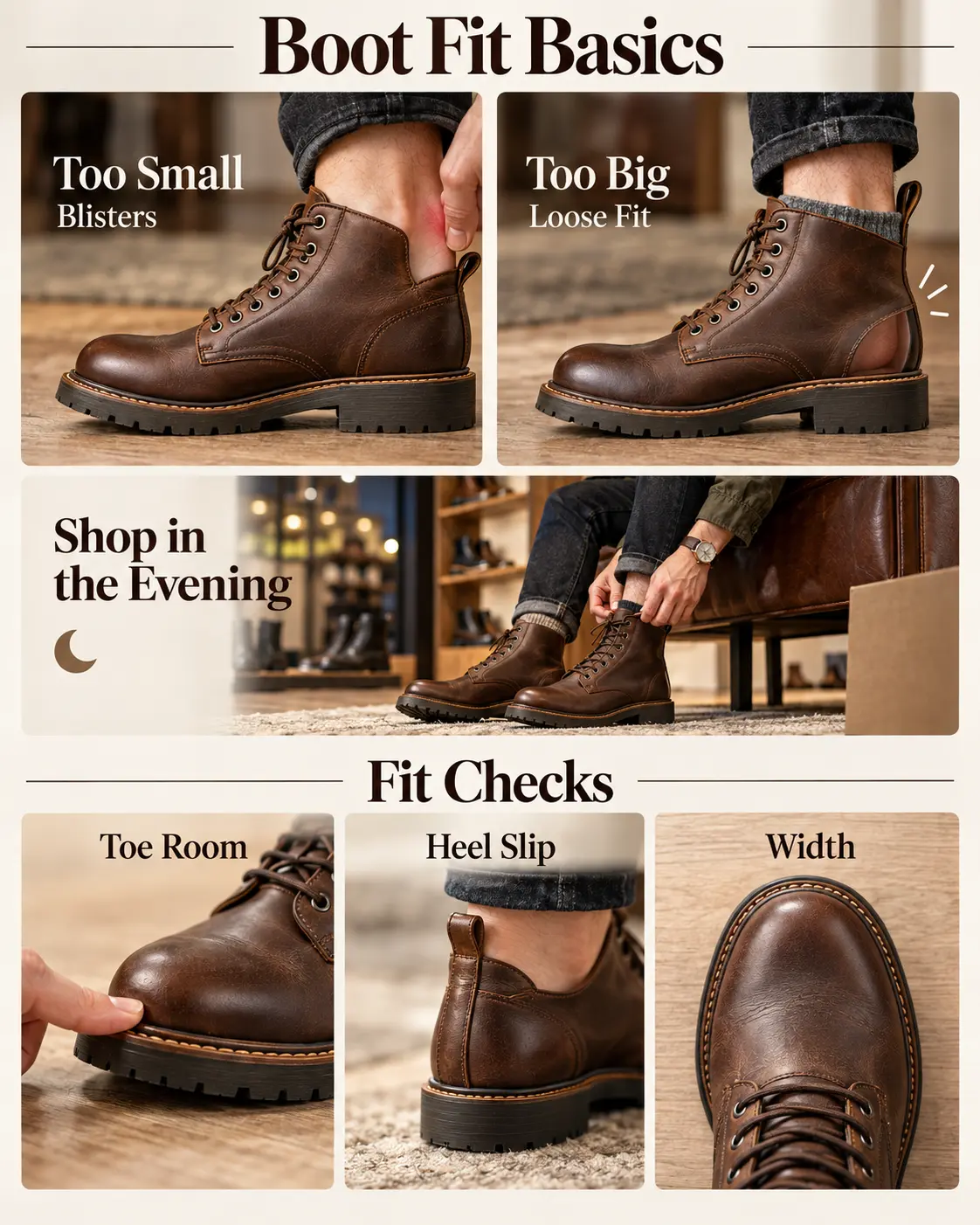
A boot that’s too small will blister you no matter what tricks you try. A boot that’s too big will never feel secure.
Shop in the evening. Feet swell throughout the day — your foot at 6 PM is roughly half a size larger than at 8 AM. That evening measurement is the foot your boots need to fit.
Try them on with the socks you plan to wear. Walk around the store for a few minutes. Check these three things:
- Toe room: Your longest toe should sit about a thumb’s width from the front.
- Heel slip: A tiny amount of lift is normal in new boots. More than half an inch means they’re too big.
- Width pressure: Snug across the ball of the foot is fine. Pinching is not.
For work boots with thick, stiff leather, consider going up a half size. That leather won’t stretch as much as softer hides. Suede and thin dress leather give more over time — you can always add an insole later if they loosen up too much.
Elevator boots add one more variable: the built-in height-increasing layer inside the boot (a contoured insole that adds 2–4 inches of lift). This insert takes up vertical space, which changes how the boot fits around your instep and arch.
When trying on elevator boots, make sure your foot sits naturally on the internal lift without your heel riding up or your toes cramming forward. The fit on top of that built-in layer is what matters — not the empty shell of the boot.
2. Start With a Moderate Heel Height
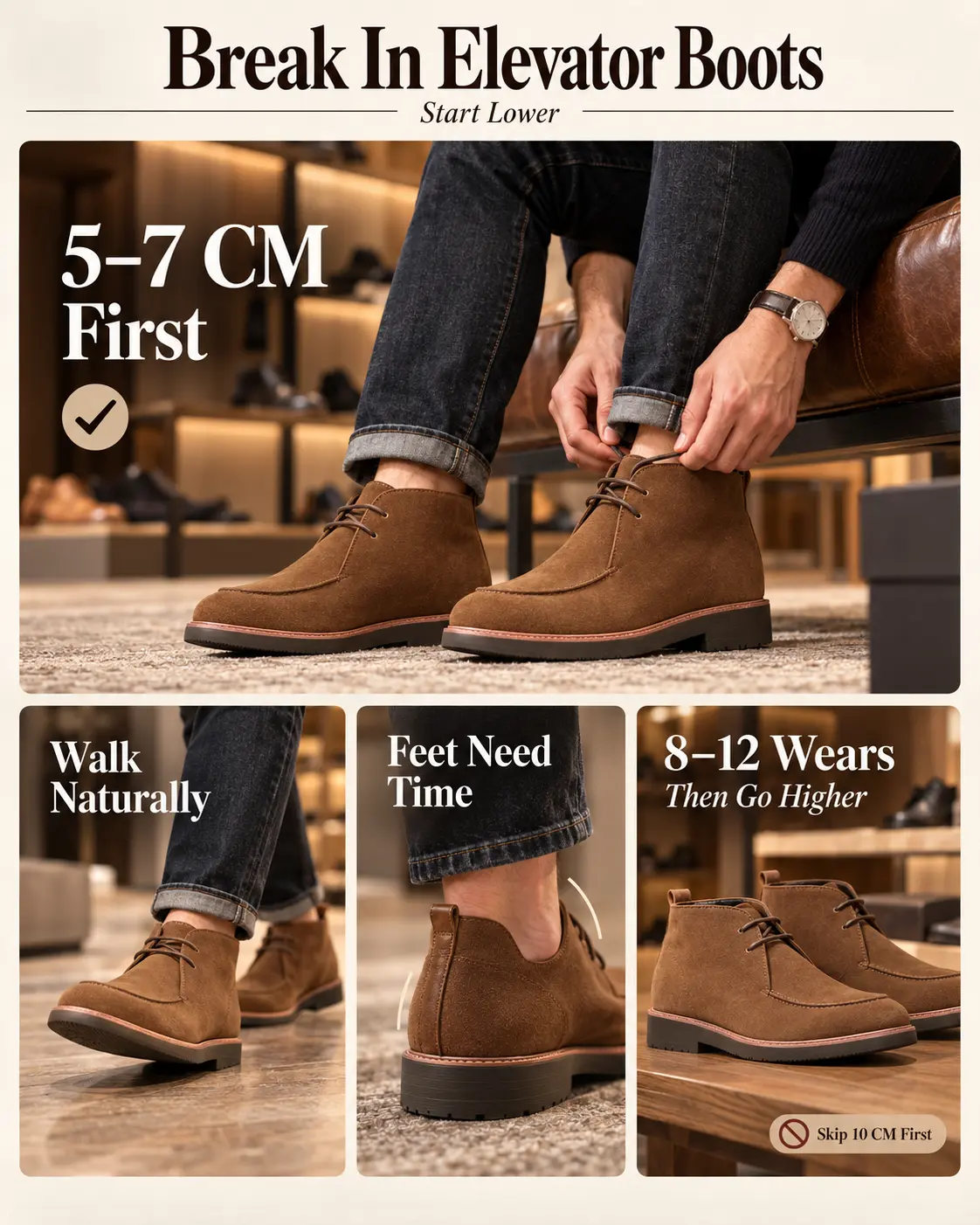
If you’re breaking in elevator boots, resist the urge to jump straight to 4-inch lifts.
A 2–3 inch internal heel (roughly 5–7 CM) lets you walk normally while your feet adapt to the elevated angle. Your calf muscles, Achilles tendon, and the balls of your feet all need time to adjust to the shifted weight distribution.
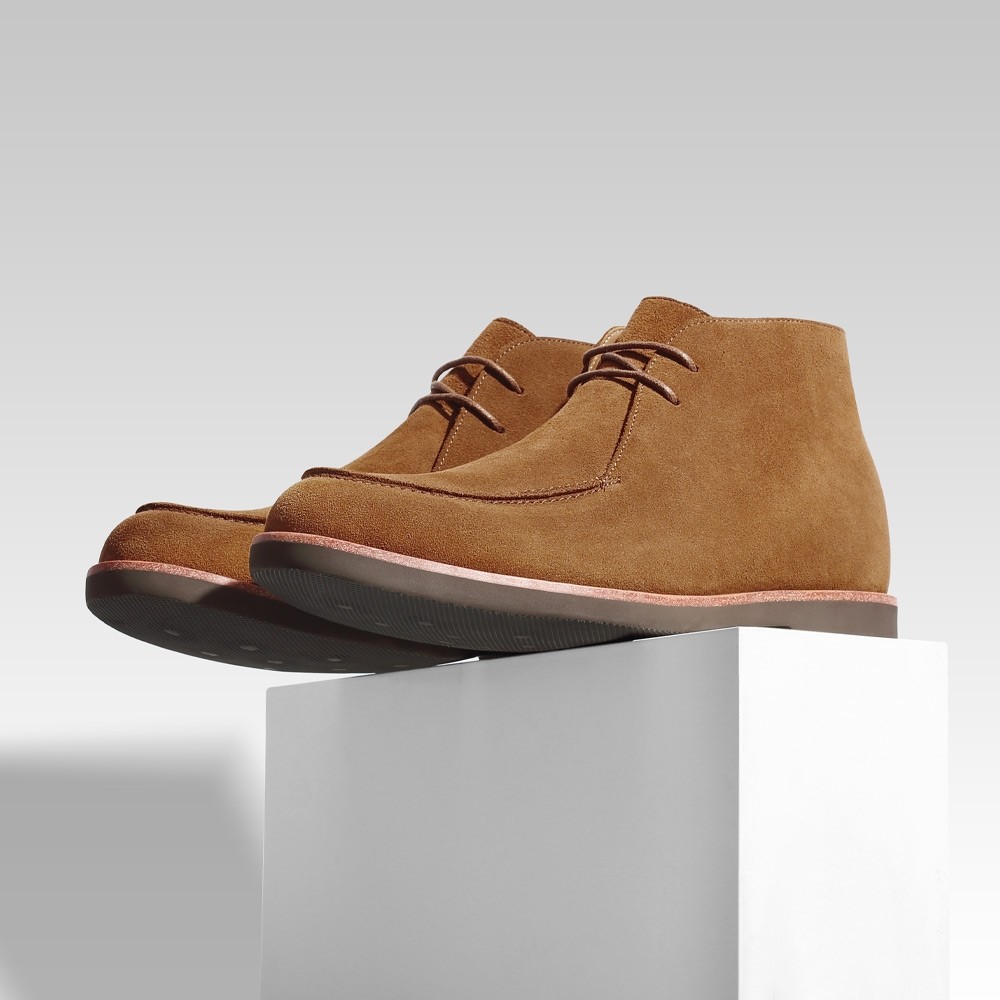
Brown Suede Men’s Height Increasing Chukka Boots 7 CM / 2.76 Inches
Taller internal lifts press harder on the ball of the foot and compress the toe box from above. During break-in, when the leather is still fighting you, that extra pressure turns a mild annoyance into a painful one.
Once the boot leather has softened — usually after 8–12 wears over a few weeks — step up to a taller height if you want. But earn your way there.
Browse by height to find your starting point:
2 Inches | 3 Inches | 4 Inches | 6 Inches
3. Thick Socks + Indoor Walks — the Real Shortcut
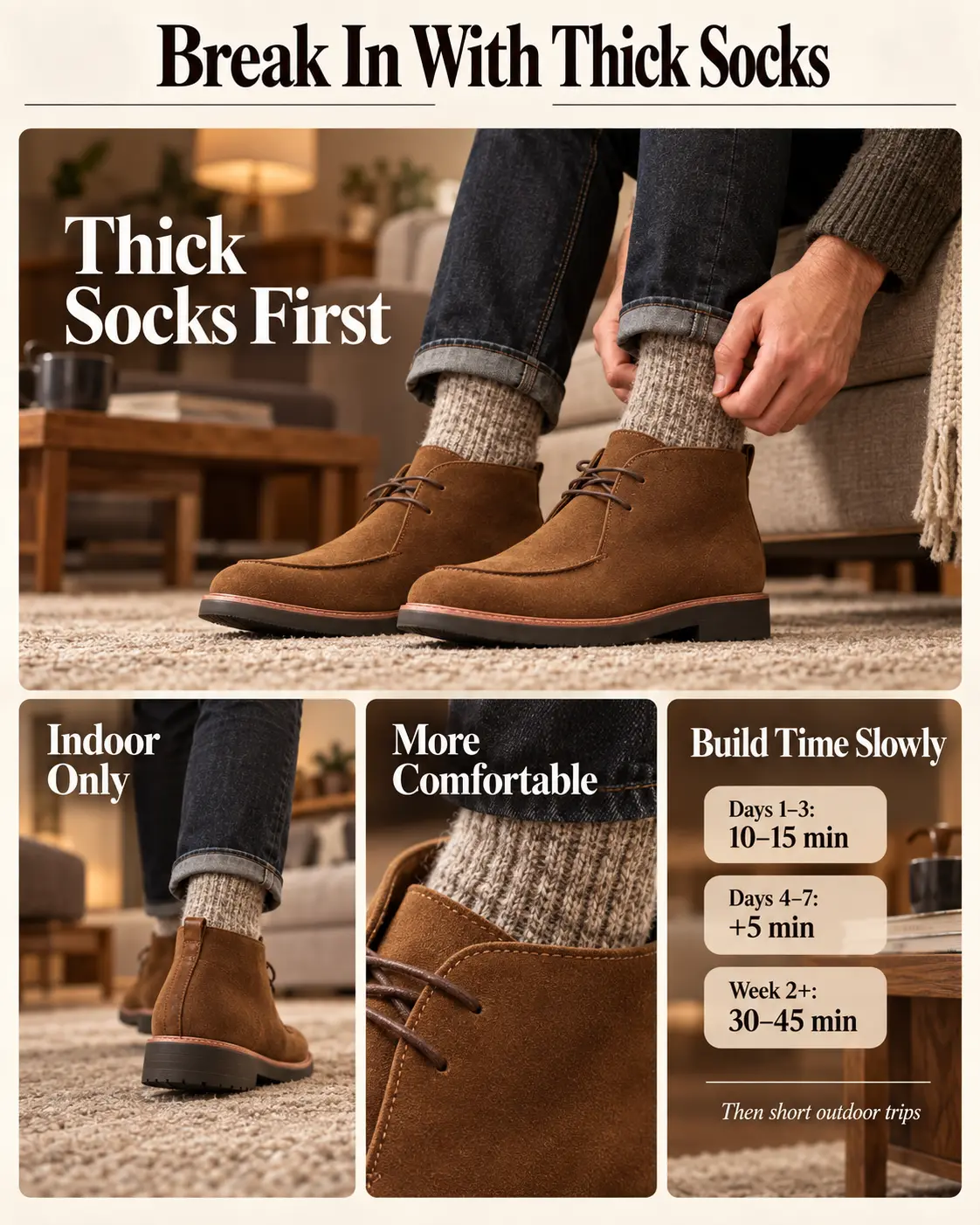
Leather softens with three things: gentle pressure, body heat, and a little moisture from your feet. Thick socks deliver all three at once.
Pull on a pair of cushioned wool or wool-blend hiking socks. Then wear your boots around the house — not outside on pavement. Here’s why: hard surfaces amplify every pressure point. Your living room carpet absorbs impact while the leather still molds.
The schedule that works:
- Days 1–3: 10–15 minutes per session.
- Days 4–7: Add 5 minutes each session.
- Week 2 onward: 30–45 minutes indoors, then short outdoor trips.
This applies to all boot types. Work boots with heavy-gauge leather and composite toes are especially stubborn — the indoor walk phase matters more, not less, for these. Leather dress boots break in faster but still benefit from gradual wear.
For elevator boots, indoor walking also lets your feet practice balancing on the internal lift without the stakes of uneven sidewalks or slick office floors. Your ankles will thank you.
4. Take Days Off (Seriously)
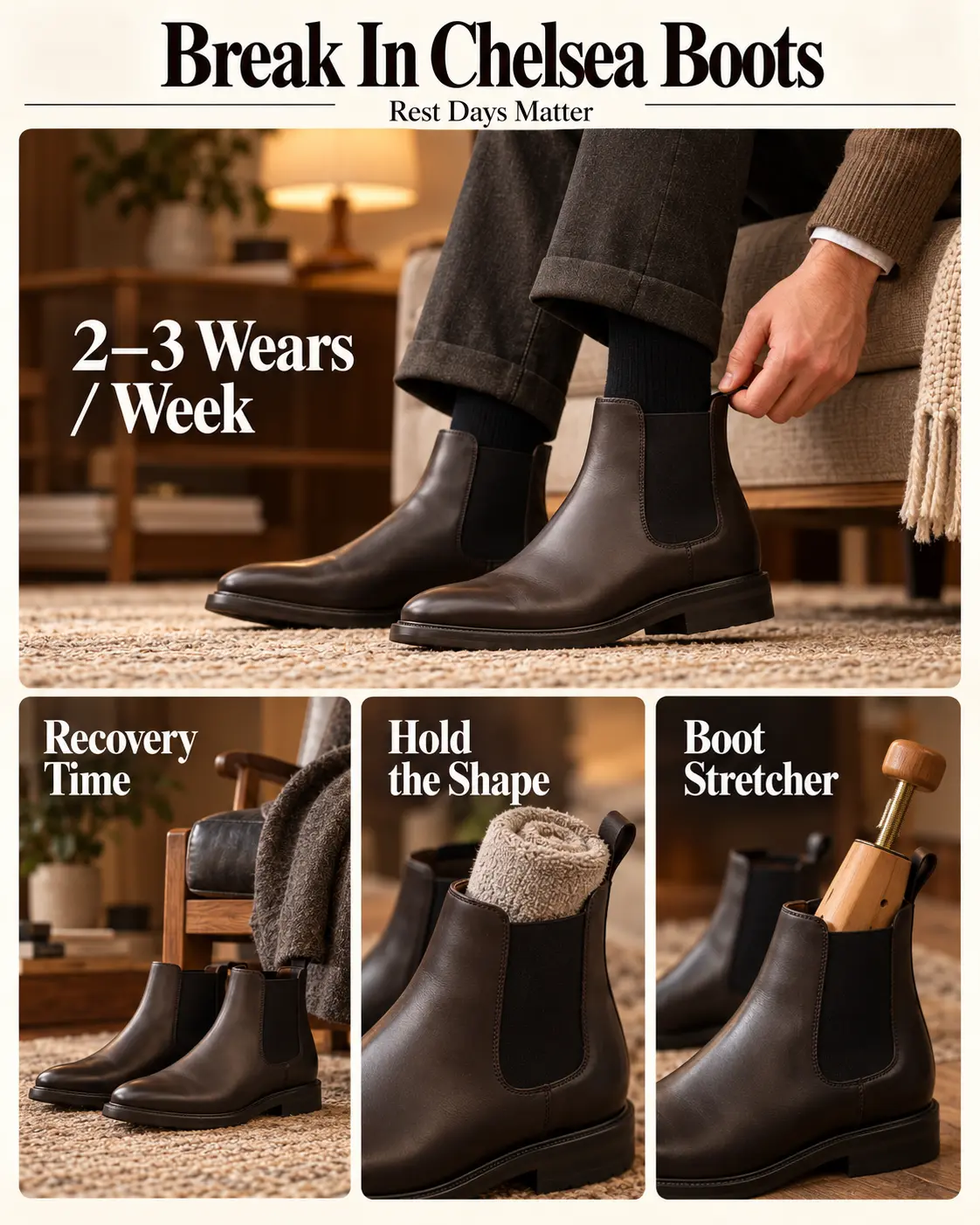
Wearing stiff boots every day feels productive. It isn’t.
Your skin needs recovery time between wears. A hot spot that could have healed overnight becomes a raw blister if you lace up again the next morning. Plan for 2–3 wears per week during the first two weeks.
On off days, stuff the boots with rolled-up towels or newspaper to hold the shape your feet created. Better yet, use a boot stretcher — more on that next.
This applies double for work boots if you’re on your feet for 8+ hour shifts. Alternate between your new pair and an older broken-in pair. Your feet get rest. Your new boots hold their stretched shape. Everybody wins.
5. Use a Boot Stretcher Between Wears
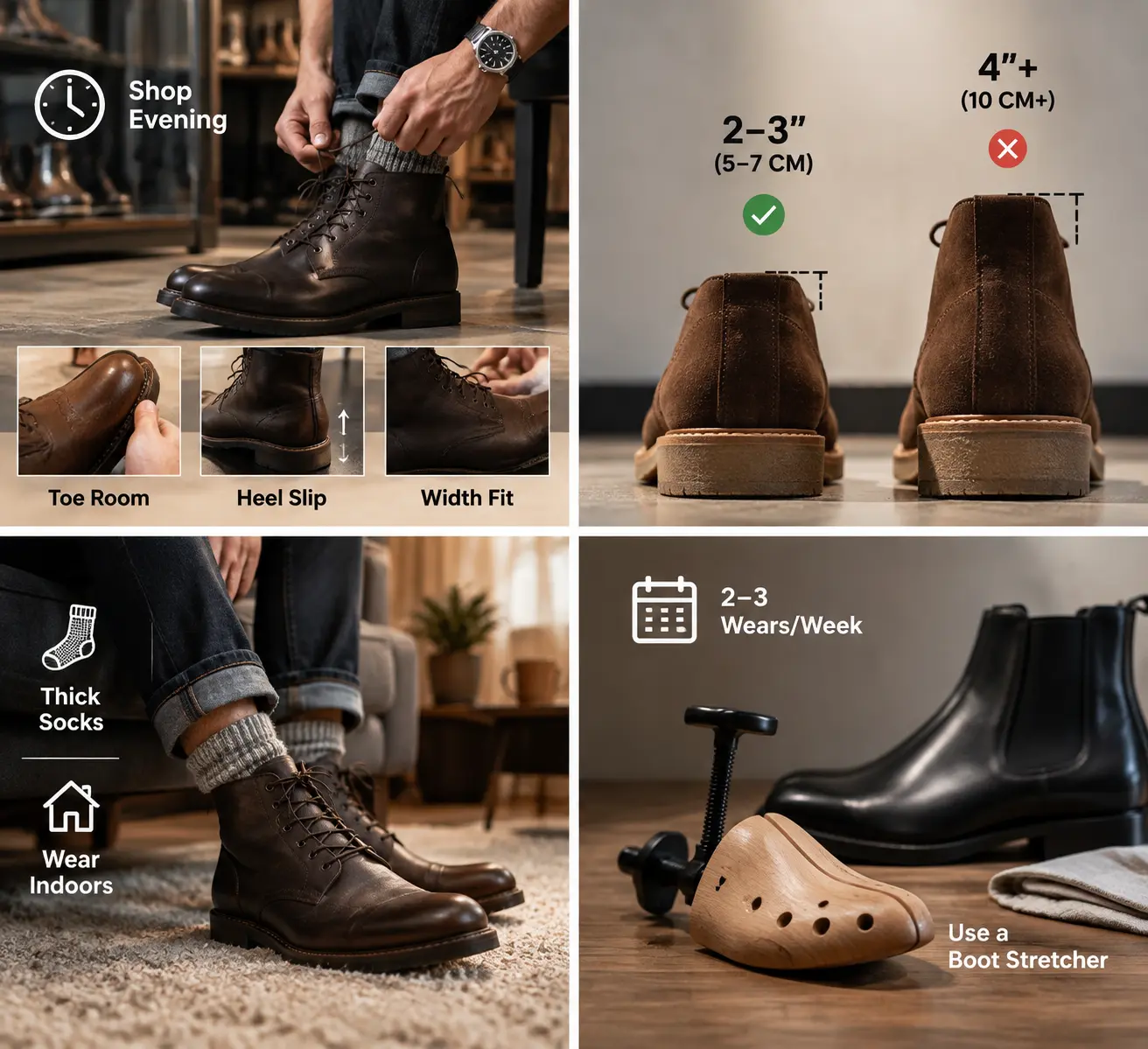
A boot stretcher is a $15–25 tool that does the work while you sleep.
Slide it into the boot after each wear and crank it to apply gentle outward pressure overnight. The stretcher holds the leather in its expanded state so it doesn’t contract back to its stiff original shape.
What to look for:
- Two-way stretchers widen the boot and lengthen it simultaneously. Good for work boots with rigid toe boxes.
- Vamp stretchers (the ones with small knobs) target specific pressure points — useful if you have bunions or a high instep.
The key: make sure the stretcher pushes the leather out evenly. Uneven pressure can create odd creases or bulges, especially in thinner leather dress boots.
For elevator boots, note that the internal height-increasing layer sits on the insole and can’t be removed in most designs. Place the stretcher on top of that layer so it pushes against the upper leather where your foot actually presses. Stretching the empty boot below the lift won’t help the fit where it counts.
6. Loosen Your Lacing Pattern
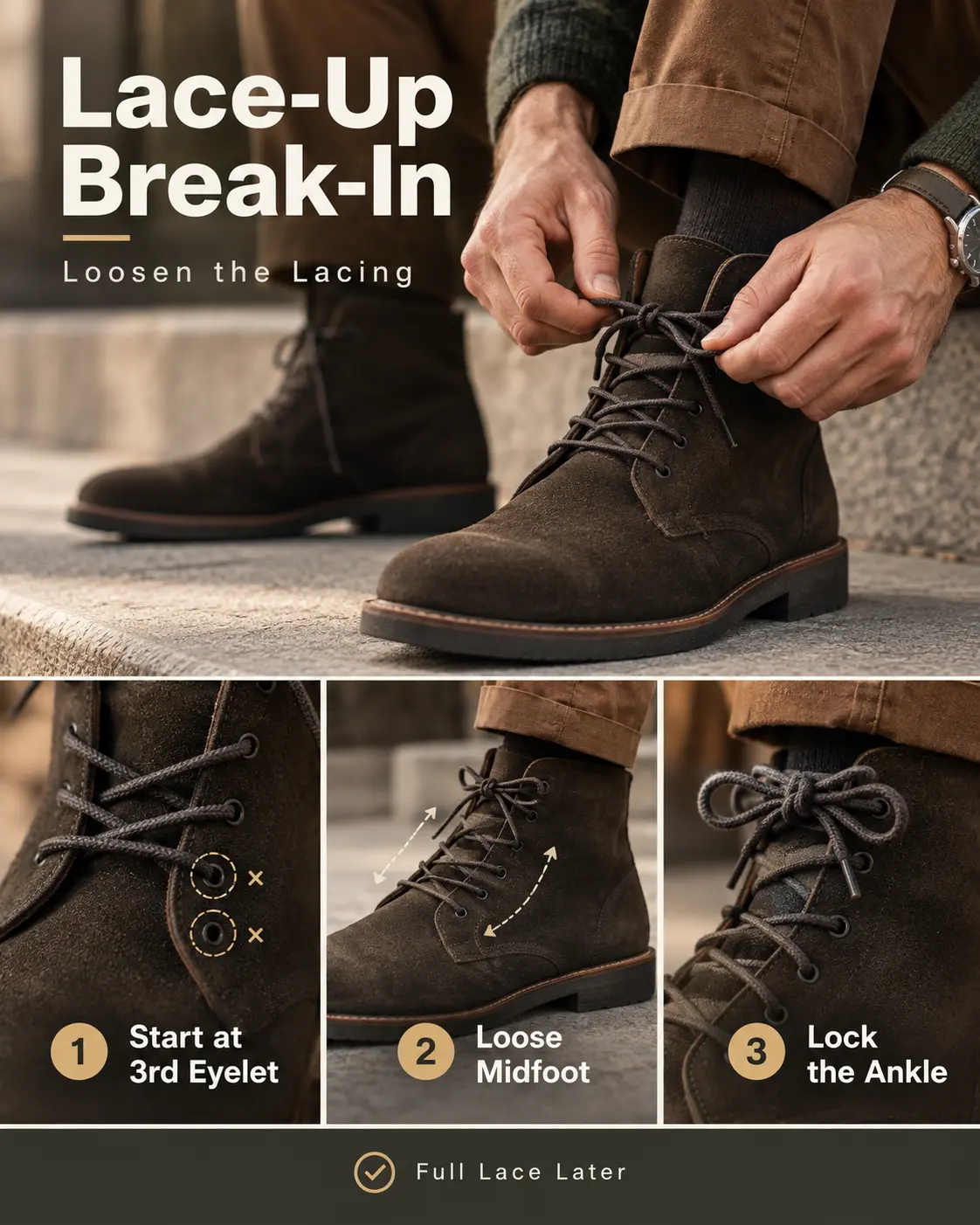
If your boots have laces — work boots, chukka boots, or lace-up dress boots — a tight lace-up during break-in cuts circulation right when you need blood flow most.
Try this instead:
- Skip the bottom two eyelets entirely. Lace from the third eyelet up.
- Keep tension loose through the midfoot and only snug up near the ankle for stability.
- Use a surgeon’s knot (loop twice at one point) at the ankle to lock that section without tightening everything below.
Once the leather softens after a few weeks, go back to full lacing for proper support. Then experiment — straight bar lacing looks clean on dress boots, and cross-lacing gives a casual edge on work boots.
No laces? Slip-on styles like Chelsea boots rely on elastic side panels that naturally flex. They’re often easier to break in, but the trade-off is less adjustability during the process. If a Chelsea boot pinches, thick socks and a stretcher are your main tools.
Breaking In Elevator Boots: The Internal Lift Layer
Elevator boots deserve a separate note because they have a component other boots don’t: a built-in height-increasing insole (sometimes called an internal lift or elevated midsole). This contoured insert sits inside the boot and adds anywhere from 2 to 6 inches of height.
During break-in, this layer creates two contact surfaces your foot has to get used to — the lift itself and the upper leather pressing down from above. Here’s how to handle it:
- Walk on the lift indoors first. Your arch needs to learn the curve of the internal insole. Flat floors let you focus on that without worrying about tripping on curbs.
- Check for arch gaps. If the lift’s arch doesn’t match yours, a thin adhesive arch pad on top of the lift fills the gap. Don’t stack a full insole on top — it’ll cram your toes.
- Expect the forefoot to break in last. The elevated angle pushes weight forward. The leather over your toes will take the longest to soften. Wiggle your toes inside the boot during wear sessions to speed this up.
- Don’t remove the lift to “pre-break-in” the boot. The lift is structural in most elevator boot designs. Breaking in the upper leather without it changes the shape your foot will actually occupy, wasting your effort.
FAQ
How long does it take to break in new boots?
Most leather boots: 1–3 weeks. Heavy work boots: 3–4 weeks. Elevator boots fall in a similar range, sometimes slightly longer as your feet also adapt to the internal lift.
Can I speed up break-in with water or a hair dryer?
A damp cloth on stiff spots, then wearing the boots, helps leather stretch faster. A hair dryer on low heat works too — hold it 6 inches away and keep moving. Never soak boots or use high heat; both damage the leather.
Should I use leather conditioner during break-in?
Yes. A light coat of conditioner (mink oil for work boots, cream-based for dress leather) the night before wearing softens fibers and cuts friction. Don’t overdo it — too much oil makes leather floppy.
What if my boots still hurt after three weeks?
The boot probably doesn’t fit. Break-in softens leather but can’t fix a wrong size. Sharp pain at the same spot every wear? See a cobbler for spot-stretching. Pain across the whole foot means the boots are too small.
Do elevator boots feel different from regular boots after break-in?
Once broken in, they feel like a regular boot with a slight heel. The internal lift becomes unnoticeable within 2–3 weeks of regular wear.
Can I wear orthotics inside elevator boots?
Thin or 3/4-length orthotics fit in most designs. Full-thickness custom orthotics usually won’t — the built-in height layer already fills that space. Check with the manufacturer first.
How do I break in work boots if I need them on a job site right away?
Wear them at home for as many evening sessions as you can before day one. On site, double up socks (thin liner + thick outer) and carry moleskin for hot spots. Alternate with an older pair at lunch if possible.
Full-grain leather vs. suede — any difference in break-in?
Full-grain is thicker and takes longer but molds firmly. Suede is softer from the start and stretches faster but wears out sooner. Same tricks apply; suede just needs fewer sessions.