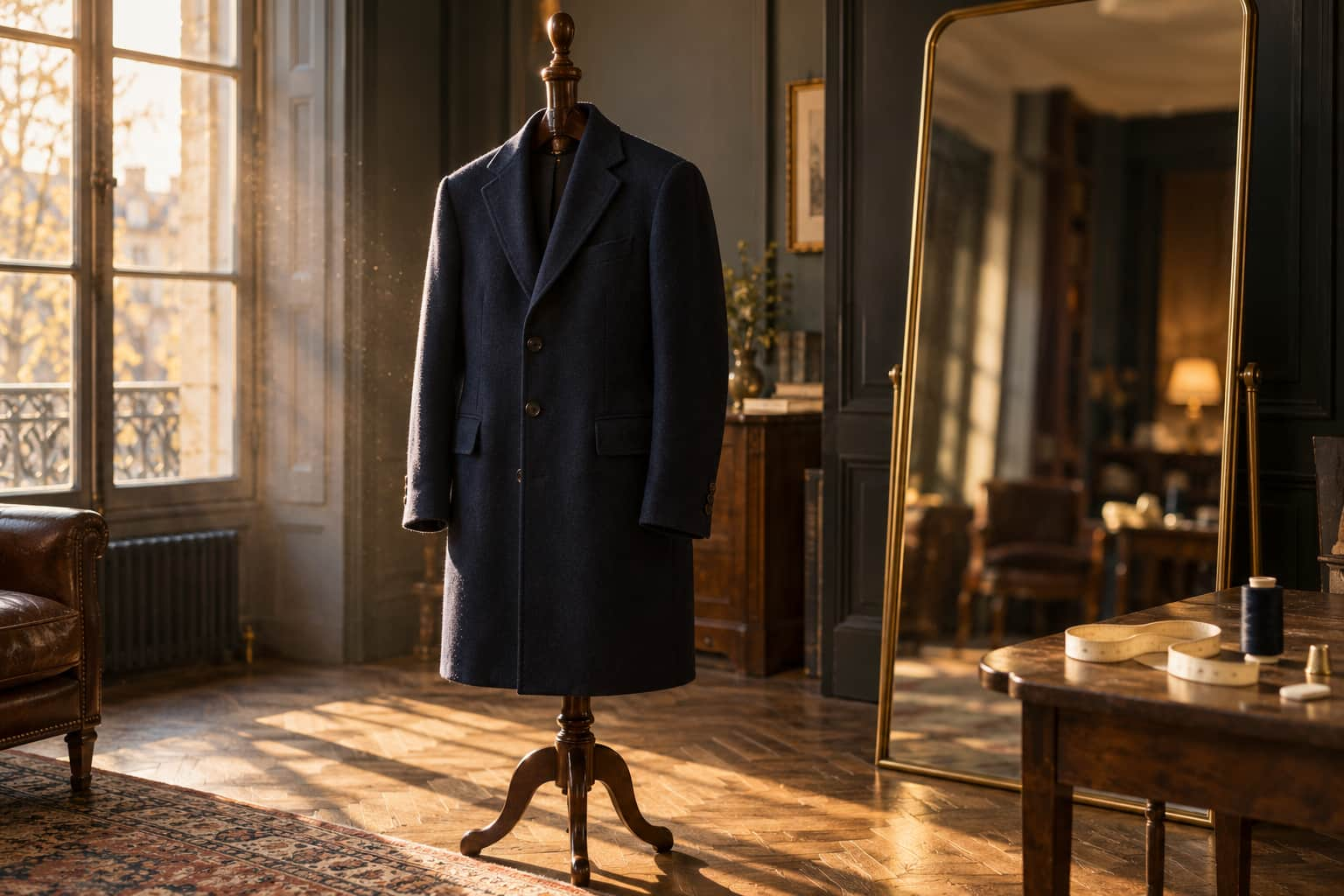
A winter coat is the first thing anyone sees, and for a shorter man it can make or break the whole outfit. A coat that is too long, too wide or too heavy swallows the frame, and the rest of your clothes cannot make up for it. Get three things right and the picture changes: the shoulders, the length and the tone.
Your coat and your footwear also work as a pair. The coat sets the top of your silhouette and the boots finish the bottom, so a good pair of winter elevator boots from CMR Chamaripa makes a well-chosen coat look even better. This guide covers what to look for in a coat, which styles suit a smaller frame, and how to put the whole look together.
Three Fit Rules That Matter Most
Before looking at styles, check the fit. These three details separate a coat that looks made for you from one that looks borrowed.
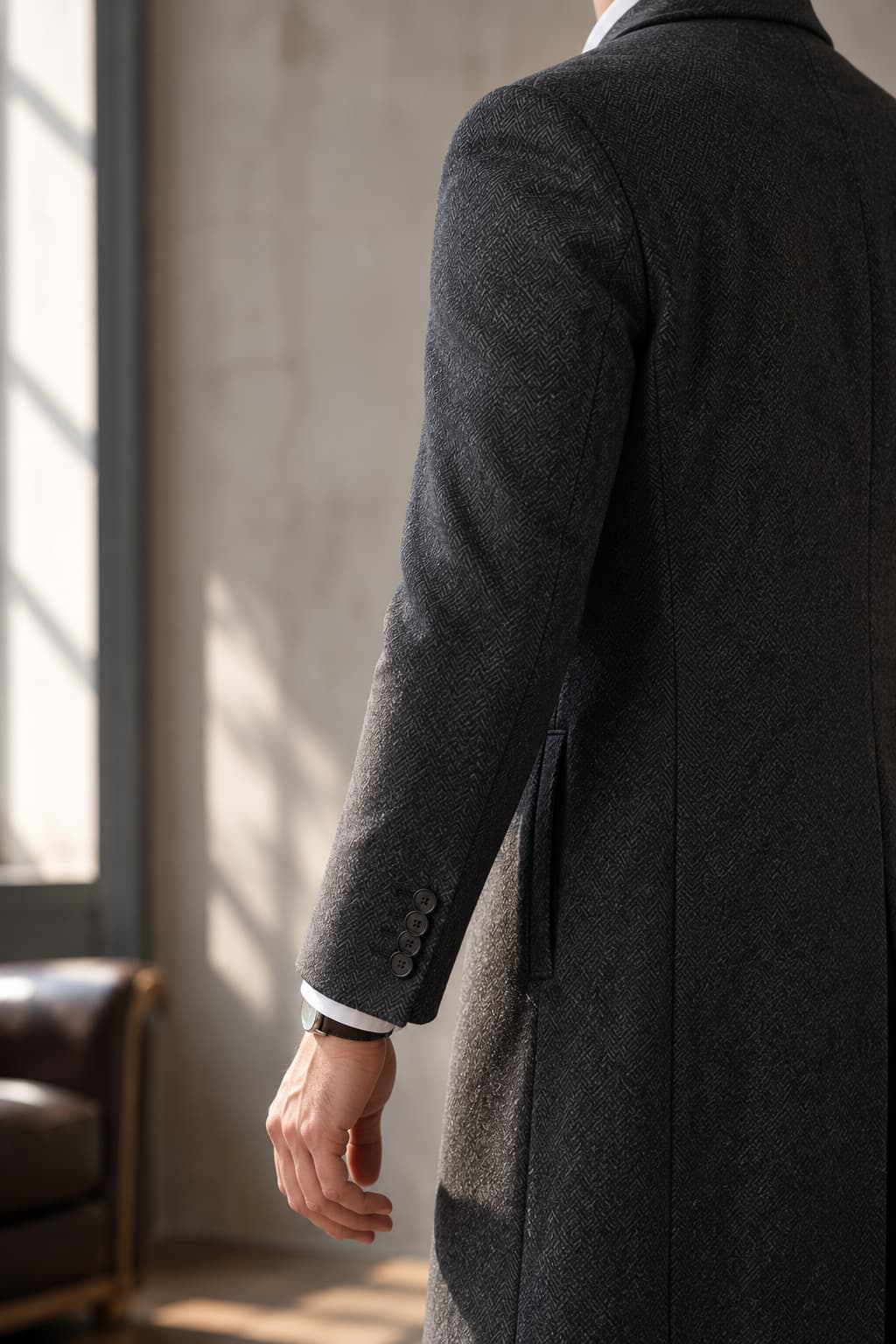
- Shoulders. The shoulder seam should sit exactly at the edge of your shoulder bone. If it droops down the arm, the coat is too big, and no amount of tailoring will fix it easily.
- Sleeves. The cuff should end around the wrist bone, with roughly half an inch of shirt cuff showing when your arms are at your sides. Sleeves that cover your hands make you look smaller.
- Hem. Where the coat ends decides how long your legs appear. More on this in a moment.
Coat Length, in Inches
As a rule, the shorter the man, the more the hem matters. For an overcoat, aim for a hem that finishes about 1 to 2 inches above the knee. A coat that falls to or past the knee cuts the leg line short, and one that reaches mid-calf will swamp most frames.
Shorter jackets, such as a pea coat, a bomber or a field jacket, should finish around the hip, roughly at the bottom of the belt line or slightly below. This leaves more of your legs visible, which helps the proportions.
One practical tip: always try a coat on while wearing the shoes you will actually wear with it. A pair of elevator shoes for men adds 2 to 3 inches of hidden lift, which changes where the hem falls on your body, so a coat that looks right in flat trainers may sit differently in boots.
Coat Styles, Ranked for Shorter Men
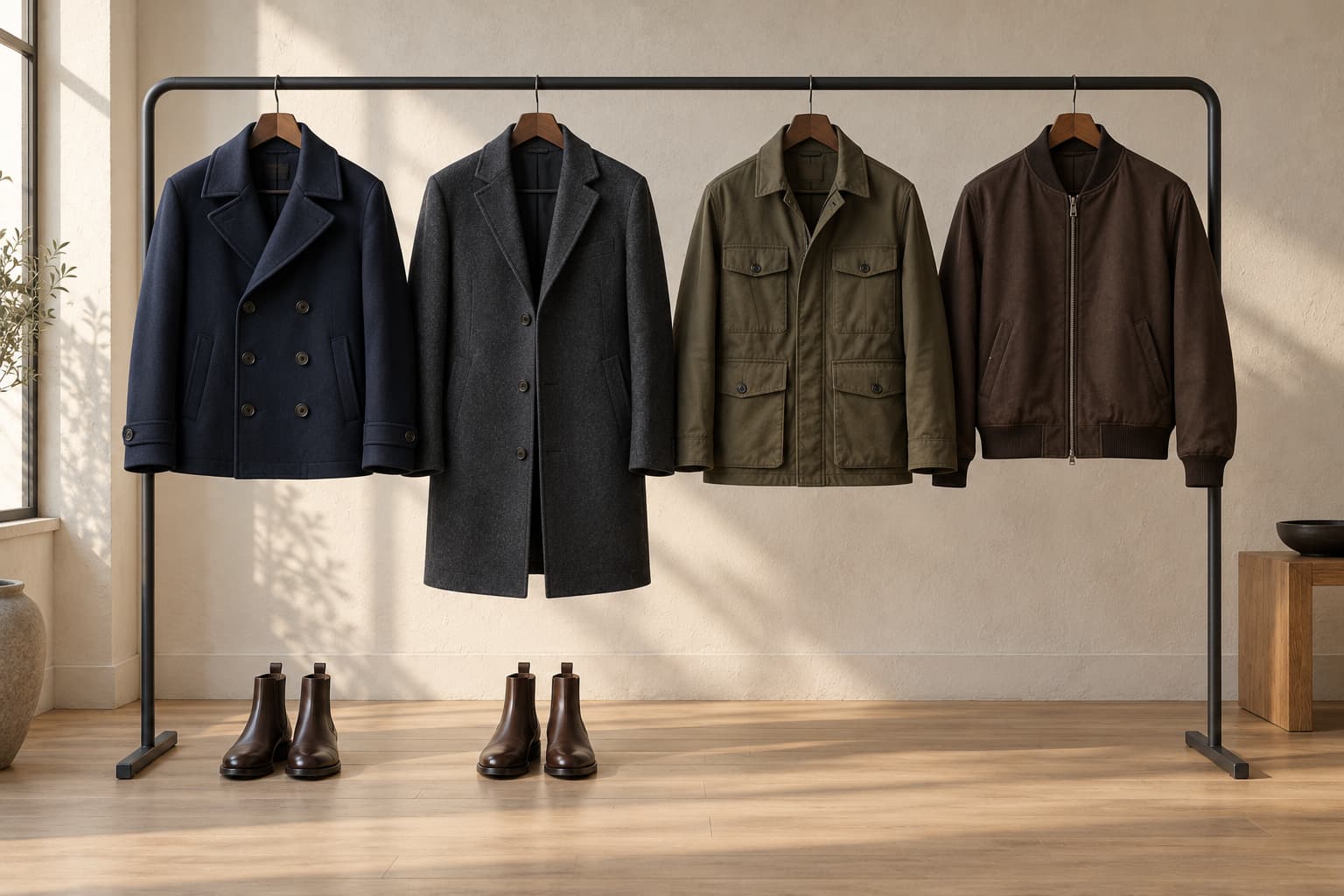
- Single-breasted overcoat. The most flattering all-rounder. A clean front, a narrow lapel and a hem just above the knee give a long, unbroken line. It works over a suit or a jumper.
- Pea coat. A short, structured wool coat that finishes at the hip. It is warm, smart enough for the office and easy to wear with jeans or straight trousers.
- Harrington or bomber. The best choice for casual days. Look for a snug fit at the waist and a hem that ends at the belt, never below the hips.
- Field jacket. A practical weekend option with a short, structured shape. Choose a muted colour such as olive or navy and keep the pockets modest.
- Short puffer. Warm and easy, but choose a fitted, hip-length one. Oversized and padded versions add bulk fast.
- Trench coat. Pick a shorter cut, and wear it with the belt loosely tied or left out. A long, heavily belted trench can overwhelm a smaller frame.
Double-breasted coats can work too, but only when the shoulders fit precisely and the length stays above the knee. A badly fitting one adds a great deal of width across the chest.
Colour, Fabric and Pattern
- Stay with dark, solid colours. Navy, charcoal, black and dark brown create a continuous column of colour, which makes the body appear longer.
- Match the tone down the body. A coat, trousers and boots in the same family, such as navy, charcoal and black, lengthen the line further.
- Keep patterns small. Large checks and bold plaids add visual width. A fine herringbone, a subtle texture or a plain weave is easier to wear.
- Choose structured fabrics. A smooth wool with some body holds its shape. Very thick, shaggy or heavily textured cloth makes you look wider.
Collars, Buttons and Pockets
Small details change how a coat reads on a smaller frame. Choose a moderate lapel width rather than a very wide one, and a collar that sits neatly against the neck. Two or three buttons set slightly higher on the chest draw the eye upwards. Keep pockets neat: flap pockets that sit flat look cleaner than large patch pockets at the hip, and an oversized hood adds weight at the top of the body.
Putting It Together with Boots
The coat is only half of the outfit. Check that the hem, the trousers and the top of the boot all connect without gaps or bunching. Straight or regular-cut trousers that just skim the top of the boot keep the leg line clean, and a boot in the same tonal family as your trousers carries the line to the floor.
For everyday commuting, 2 to 3 inches of hidden lift looks natural under a coat and keeps long walks easy. For a more formal evening, 3 to 4 inches adds presence. Our winter footwear guide for shorter men covers which boot styles work best, plus how to look after them through rain and road salt.
Quick Outfit Formulas
- Daily commute: A navy pea coat, charcoal straight trousers and dark brown Chelsea boots.
- Office: A charcoal single-breasted overcoat over a suit, with black dress boots.
- Weekend: An olive field jacket, dark straight-leg jeans and lace-up boots.
- Evening out: A dark wool overcoat, a fine-knit roll-neck and polished Chelsea boots.
Want a perfect fit? Explore our bespoke elevator shoes.
Frequently Asked Questions
Can I wear a puffer jacket if I’m short?
Yes, if you choose the shape carefully. Go for a fitted, hip-length puffer with narrower quilted channels and a clean hem, rather than a thick, oversized one that falls past the hips. Heavy padding adds bulk very quickly on a smaller frame, so a slimmer filling or a puffer worn as a mid-layer under a coat often looks sharper.
What can a tailor alter on a coat, and what can’t they?
Sleeve length and hem length can usually be adjusted, and a tailor can often take in the body a little. Shoulders are the hard part: rebuilding them is difficult and rarely worthwhile. That is why it pays to buy for the shoulders first and have the sleeves and hem altered afterwards.
How do I measure a coat before buying online?
Lay a coat that already fits you well flat and measure three things in inches: the width across the shoulders from seam to seam, the sleeve from the shoulder seam to the cuff, and the length from the base of the collar to the hem. Then compare those figures with the size chart of the coat you are considering.
Do cropped jackets really make me look taller?
A jacket that finishes around the belt line shows more of the leg, which helps proportion. It only works when the cut is neat, though. A boxy jacket that is also too short can make the torso look wide, so check that it still follows the line of your body.
Is a long overcoat ever a good idea?
It can work when the coat is structured, narrow through the body and in one dark colour, with trousers and boots in the same tonal family so that the line carries down to the floor. Wear it unbelted and avoid anything that reaches mid-calf, which shortens the leg line.