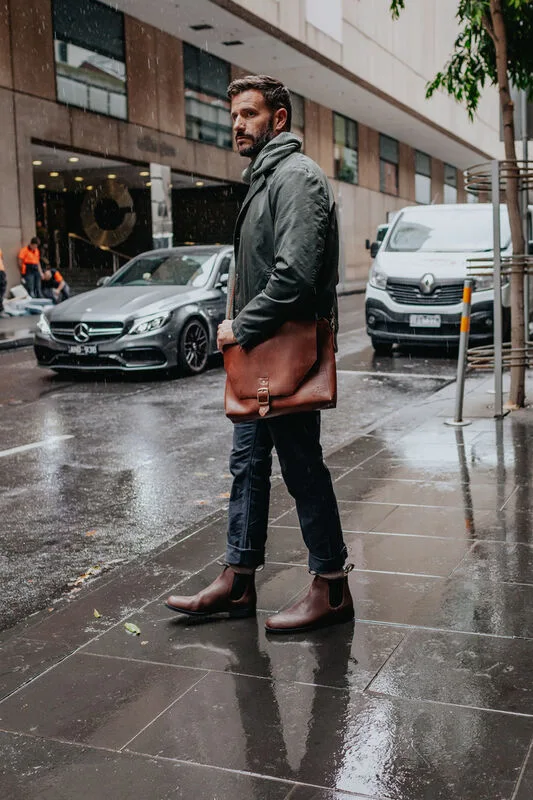
Why Winter Is Harder on Shorter Proportions
In summer, a shorter man can rely on light fabrics and clean lines. In winter, three things work against him. Heavy coats add width at the shoulders and hips. Thick knitwear breaks up the vertical line of the body. Oversized boots with wide, flat soles make the leg look stubby rather than long.
The fix is not to dress less warmly. It is to keep the line from shoulder to ground as unbroken as possible, and to let the footwear do some of the lifting. A well-made pair of elevator shoes for men hides the lift inside the sole, so the boot keeps a normal, tidy profile while you gain the height where it matters.
What to Look for in Winter Footwear
Before choosing a style, check the details that decide how a boot behaves from November to March:
- The upper. Read the material listed on the product page. A smooth, well-finished upper is easier to wipe clean after a wet commute than a heavily textured one.
- Lining. You can choose a fleece-lined option for extra warmth. Think about how much of your day is spent outdoors versus in heated buildings before you decide.
- The outsole. Grip depends on the specific style, so look at the sole photos. A clear tread pattern is a better sign than a smooth, flat base.
- Weight. Lighter boots are easier to walk in over a full day of stairs, platforms and pavements.
- Where the lift sits. The height should be built into the sole, not stacked on top of it, so the boot looks like an ordinary boot from every angle.
How Much Lift Works in Winter
Winter boots already have more sole than summer shoes, so they naturally look more substantial. That means you rarely need to go to the top of the range. For everyday commuting, 2 to 3 inches of hidden lift looks natural and keeps long walks easy. For occasions where you want more presence, such as a work event or an evening out, 3 to 4 inches is a popular choice. CMR Chamaripa lifts range from 2 to 6 inches, so there is room to move either way.
If you are new to height-boosting footwear, start at the lower end and build up. Our guide to how these shoes feel to wear day to day covers what to expect in the first few days.
Boot Styles That Work on UK Streets
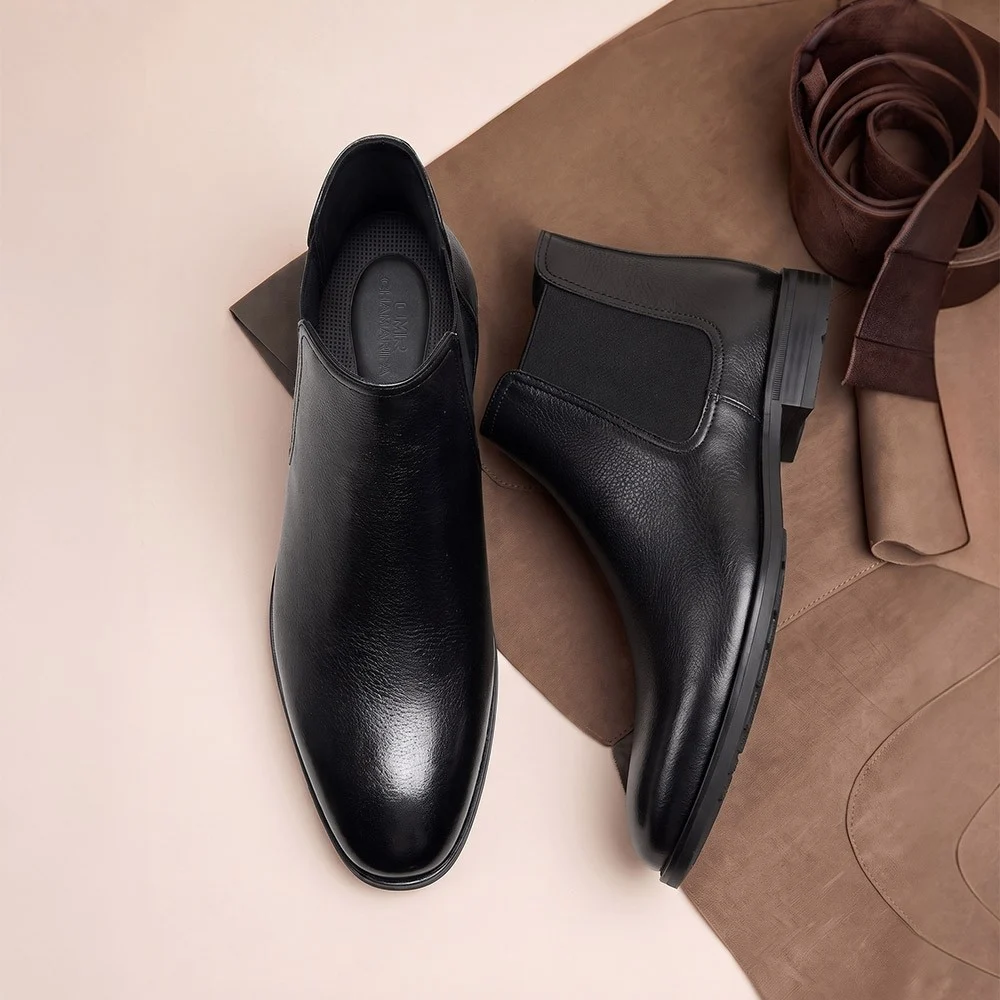
Chelsea boots. The most popular choice, and it is easy to see why. The clean, laceless line looks sharp under straight trousers, and pulling them on in the dark of a winter morning takes seconds. They work for the office, dinner and weekends alike.
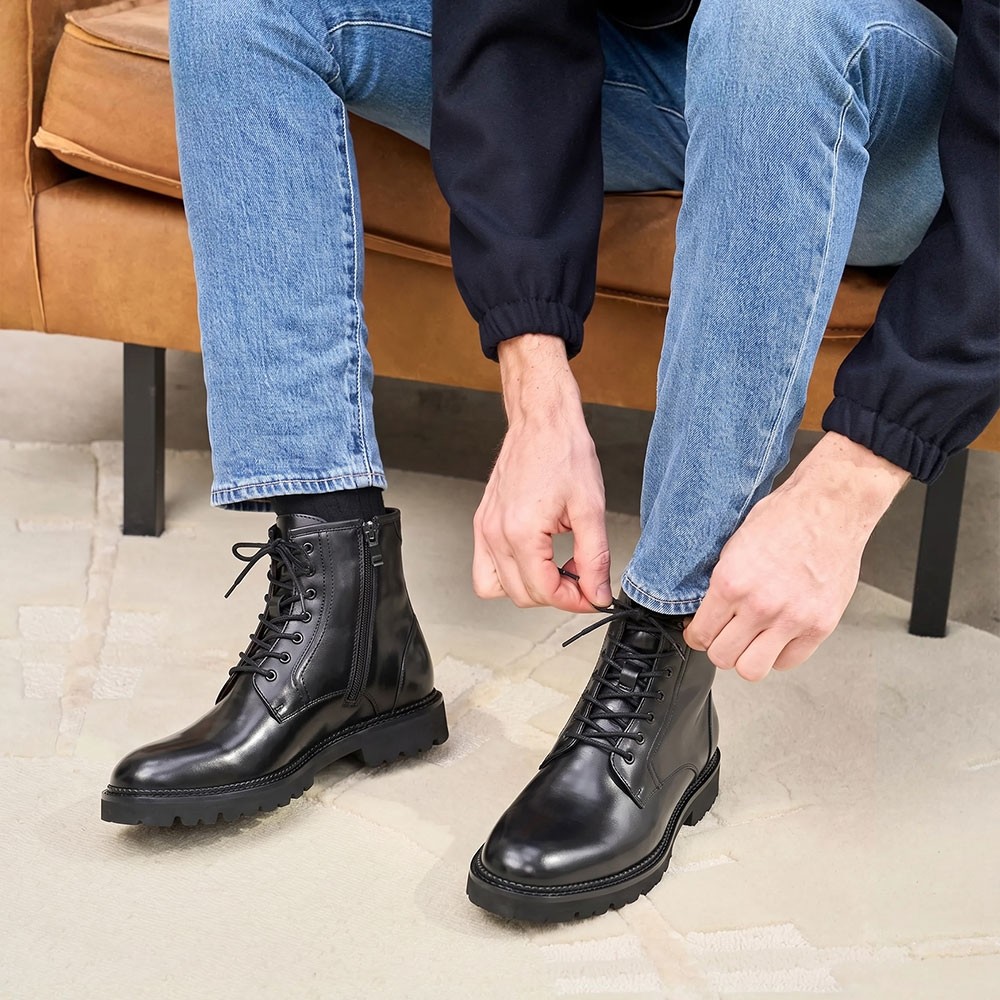
Lace-up boots. A secure, sturdy option for wet weekends and long walks. The laces let you adjust the fit around the ankle, and the more rugged look pairs well with chunky knitwear and casual coats.
Chukka boots. Ankle-height and understated, chukkas suit smart-casual outfits. They sit neatly under a trouser hem and never look heavy.
Dress boots. When the dress code is formal, a polished dress boot works with a suit and a wool overcoat, and keeps the outfit tidy in cold, wet weather.
For a wider look at the options, see our guide to boots that make you taller.
Styling: Trousers, Socks and Coats
The boot is only half of the picture. How you dress around it decides whether the height reads as natural.
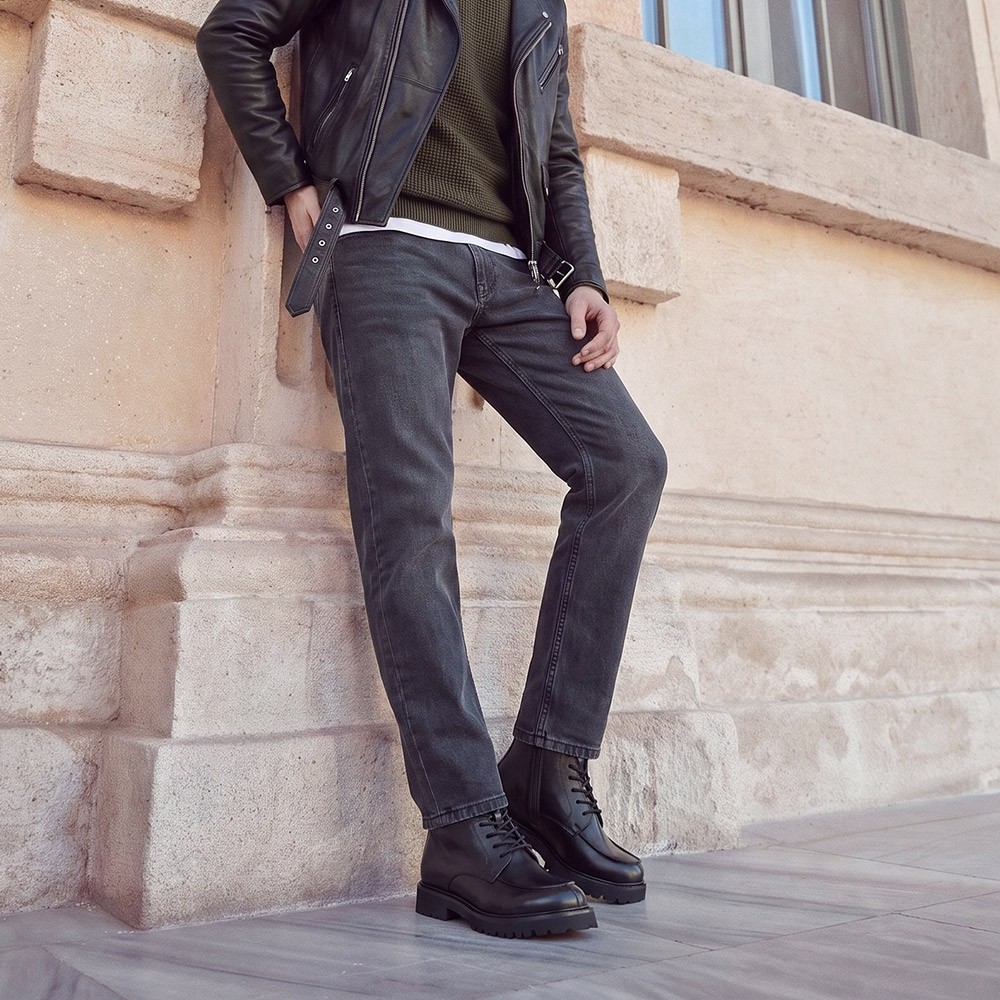
- Trousers. Choose straight or regular-cut trousers. Let the hem just skim the top of the boot, with at most a slight break. Excess fabric bunching over the boot shortens the leg line at once.
- Socks. Match your socks to your trousers rather than to a contrasting colour. The eye then travels from waist to boot without interruption.
- Colour. Boots in the same tonal family as your trousers, such as dark brown with charcoal or black with navy, lengthen the line further.
- Coats. Keep coat length at or just above the knee, and make sure the shoulder seams sit on the edge of your shoulders. A coat that swallows the frame undoes the work your boots are doing.
Looking After Winter Boots
UK winters are hard on any footwear: rain, road salt and radiators all take a toll. A few habits keep a pair looking good for years:
- Treat before the wet season. Apply a waterproofing spray suited to the upper. Test on a small hidden area first.
- Wipe off salt promptly. White salt marks can dry into the surface. Use a soft, damp cloth as soon as you get in.
- Dry naturally. Keep boots away from radiators and heaters, which can dry out and stiffen the upper. Stuffing them loosely with paper helps them hold their shape.
- Rotate two pairs. Giving each pair a full day to rest between wears extends its life.
- Use shoe trees. Once the boots are dry, shoe trees keep the shape and prevent creasing.
Winter Occasions at a Glance
- Daily commute: Chelsea or lace-up boots, 2 to 3 inches of lift, with grip checked on the sole.
- Office: Chelsea, chukka or dress boots with straight trousers and a matching sock.
- Christmas party or evening out: A polished dress or Chelsea boot, with 3 to 4 inches for extra presence.
- Weekend walks: Lace-up boots with a fleece-lined option if you will be outside for hours.
Find Your Winter Pair
Winter footwear should work as hard as you do. Pick a style that suits your week, choose a lift height you are comfortable with, and dress around it with clean lines and matching tones.
Want a perfect fit? Explore our bespoke elevator shoes.
Frequently Asked Questions
Can I wear height-boosting boots in heavy rain or snow?
Yes for everyday wet weather. Rainy commutes and damp pavements are fine, but no boot is built for standing in deep puddles or slush for hours. Check the materials listed on the product page for the style you like, and switch to a drier pair if the forecast turns severe.
Are they slippery on wet or icy pavements?
Grip depends on the outsole of the specific style, so look closely at the sole photos and description on each product page. As a general rule, a sole with a clear tread pattern holds better on wet pavement than a smooth, flat one. On ice, no boot is a substitute for slow, careful steps.
Should I size up for thick winter socks?
Order your regular size by default. Only consider going up a size if your feet are wider or thicker than average, rather than simply because you plan to wear heavier socks.
Should I choose fleece-lined or unlined boots?
Fleece-lined pairs suit days spent mostly outdoors, long walks or cold journeys to work. If you spend most of your day in a heated office, train carriage or car, an unlined pair usually feels more comfortable indoors. You can choose the fleece-lined option when you order.
When should I order winter boots to receive them before Christmas?
For delivery before Christmas, order in early December at the latest. Custom pairs are made to order and take about 15 working days to produce before delivery, so if you are going bespoke, order well before December.