In the pursuit of a more commanding presence, many men in Canada turn to a quick fix: shoe lifts. Whether you’re preparing for a high-stakes board meeting in Toronto or a wedding in the Rockies, that extra 2 to 4 inches can provide a significant boost in confidence.
However, as an expert in footwear ergonomics, I’ve seen too many men compromise their foot health and their “secret” by choosing the wrong type of elevation. Today, we’re going to review the best shoe lifts for guys and discuss why your choice of “how” you add height matters just as much as “how much” you add.
The 3 Types of Shoe Lifts Every Man Should Know
Before you click “buy” on the first pair of silicone pads you see, it’s essential to understand the different engineering behind common height inserts:
-
-
Full-Length Orthotic Lifts: These run the entire length of the shoe. They offer the best stability and arch support but require a high-volume shoe to fit properly.
-
Heel Inserts (The “Stackers”): Often made of gel or foam, these are the most common. While convenient, they often shift during movement, leading to an unstable gait.
-
Adjustable Layered Lifts: These allow you to “stack” layers to reach your desired height. While they sound versatile, they are notoriously famous for creating a “cliff” inside your shoe, which puts immense strain on your Achilles tendon and can lead to long-term inflammation.
-
Why Most “Top-Rated” Lifts Fail the Canadian Lifestyle
Canada is a country of movement. Between navigating the slushy streets of Montreal and the long commutes in Vancouver, your feet endure a lot. This is where standard, over-the-counter shoe lifts often fail:
-
The “Heel Slip” Problem: Most standard sneakers and dress shoes have a low “heel counter.” When you add a 2-inch lift, your heel sits too high, causing it to slip out with every step.
-
The “Toe Crush” Effect: As we discussed in our previous article regarding tight shoes, adding a thick insert into a normal shoe reduces the internal volume, squeezing your toes and risking long-term deformity.
-
The “Pavement Fatigue”: Cheap silicone lifts lack energy return. After a few hours of walking on hard pavement, the “lift” compresses, and your feet begin to ache.
To visualize these differences, watch this deep dive into the practical reality of wearing common shoe lifts.
Video: Shoe Lifts – The Good, The Bad, and The Ugly
Before investing in DIY inserts, it’s crucial to see how they actually perform (and fail) in real-world scenarios.
The Expert Verdict: DIY Lifts vs. Professional Integration
If you are looking for the best shoe lifts, the truth is that the best “lift” is one that was designed into the shoe from the beginning.
While DIY inserts are a decent temporary solution for a one-off event, they lack the 15° Gold Angle required for a natural, confident stride. Professional height-increasing shoes solve the problems that separate lifts create:
| Feature | DIY Shoe Lifts (Inserts) | Professional Elevator Shoes |
|---|---|---|
| Walking Stability | Moderate to Low (often shifts or slides) | High (Solid integrated foundation) |
| Long-term Comfort | Poor (crowds the toe box, causes pain) | Excellent (specifically engineered lasts) |
| Invisibility | Risky (heel height may expose the lift) | 100% Discrete (hidden silhouette) |
| Foot Health | Potential Achilles strain & blisters | Ergonomic support & natural gait |
| Durability | Compresses over time (loses height) | Maintains height for years |
Expert Recommendation
Experience the 15° Gold Angle Integration
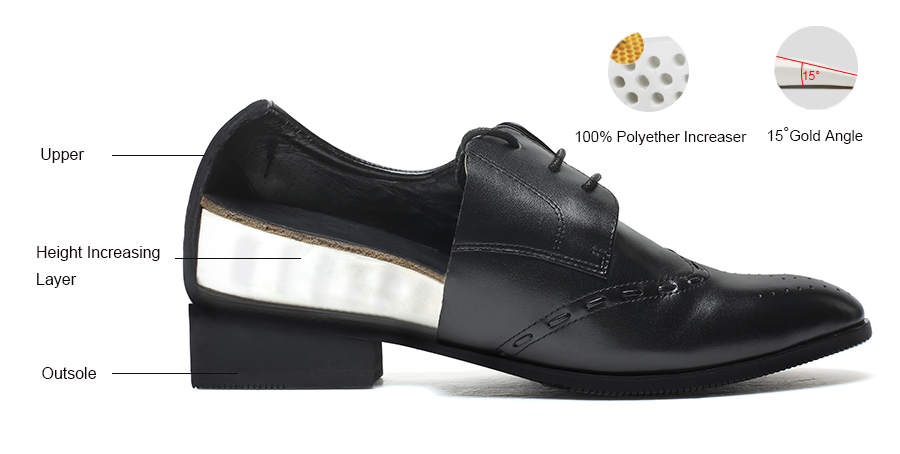
Designed with a 100% Polyether Increaser and ergonomic arch support for a natural gait.
How to Choose the Right Elevation for Your Needs
If you aren’t ready to commit to a full pair of elevator shoes yet, and still want to try inserts, follow these expert rules:
-
Check the Heel Depth: Only use lifts in boots or high-top sneakers. Low-top dress shoes are not designed to hold an extra inch of height safely.
-
Prioritize Firmness over Softness: Very soft gel lifts feel good for five minutes but offer zero support. Look for high-density polyether materials.
-
The “Thumb Test”: Once the lift is in, you must still have a thumb’s width of space at the toes. If not, you are sacrificing your foot health for height.
Frequently Asked Questions (FAQ)
Can I put shoe lifts in any type of shoe?
Technically, yes, but practically no. Most men find that lifts only work well in boots. In regular oxfords or loafers, the heel will sit too high, making it obvious you are wearing a lift and causing the shoe to fall off.
Do shoe lifts hurt your back?
If they lack proper arch support or provide an unnatural tilt, yes. Long-term use of poorly designed lifts can lead to lower back pain and misaligned posture.
What is the most invisible way to look taller?
The most invisible method is using shoes for short men with built-in elevation. Because the outer silhouette of the shoe is designed to hide the internal lift, nobody can tell you are wearing them—even if they look closely at your feet.
Final Thoughts
Choosing the best shoe lifts for guys is about more than just adding inches; it’s about maintaining the integrity of your stride and the health of your feet. If you’re tired of the discomfort and the “slipping heel” of DIY inserts, it might be time to invest in footwear that was built for the job.